









KBLI 2025 vs KBLI 2020: How to Read Your NIB and Confirm Compliance
Agustus 7, 2026
•
Waktu baca 9 menit

Isi
A finance manager pulls up the company’s NIB before a bank meeting and freezes. The listed activity codes look unfamiliar. This moment is now common across Indonesia, because the national business classification system changed at the end of 2025.
This article is written for PT PMA (foreign-owned limited liability company) owners, local company directors, and new investors who need to confirm whether their NIB reflects KBLI 2025 or the retired KBLI 2020 system, and what to do about it.
In Business Hub Asia’s own caseload, not every code change forces a company back to the notary. When the underlying business activity has not actually changed, the OSS system alone can usually carry the KBLI 2025 adjustment through to completion.
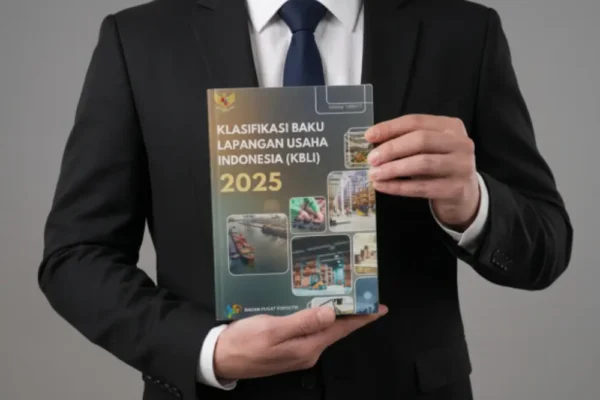
KBLI 2025, enacted through Peraturan Badan Pusat Statistik (BPS) Nomor 7 Tahun 2025, replaced KBLI 2020 as Indonesia’s official industrial classification on 17 December 2025. A NIB (Nomor Induk Berusaha, or Business Identification Number) is only compliant if the codes attached to it match the new structure, not the retired one.
The six-month adjustment window that followed closed on 17 June 2026. That means every company operating in Indonesia today should already know which system its NIB reflects, and, if it has not adjusted yet, should treat this as an active compliance gap rather than a future deadline.
What Is KBLI in Indonesia?
KBLI Indonesia stands for Klasifikasi Baku Lapangan Usaha Indonesia, the Indonesian Standard Industrial Classification. It is the master list BPS uses to categorize every economic activity a business in Indonesia can legally carry out.
Every company registered through the Online Single Submission Risk-Based Approach (OSS RBA) system, whether a PT PMA or a local PT, must attach one or more KBLI codes to its NIB. The code chosen determines the risk classification of the business, the type of license required, and which government agency has oversight.
KBLI is not cosmetic paperwork. Indonesia’s investment framework, tax reporting, and sector-specific licensing all key off the KBLI code recorded on a company’s NIB, which is why an outdated code creates friction well beyond the OSS portal itself.
KBLI 2020 vs KBLI 2025: What Actually Changed?
KBLI 2025 was built to align with the International Standard Industrial Classification (ISIC) Revision 5, the United Nations framework most countries use as a reference when updating their own systems. BPS confirmed the update was needed to capture activities that barely existed when KBLI 2020 was drafted, particularly platform-based digital businesses.
| Element | KBLI 2020 | KBLI 2025 |
| Legal basis | Peraturan BPS Nomor 2 Tahun 2020 | Peraturan BPS Nomor 7 Tahun 2025 tentang Klasifikasi Baku Lapangan Usaha Indonesia (KBLI)/ Regulation of BPS No. 7 Year 2025 concerning KBLI. |
| Categories | 21 (A to U) | 22 (A to V) |
| Major groups | 87 | 87 |
| Sub-groups | Fewer digital and platform-specific entries | 519, including new digital economy classes |
| Business classes | Approximately 1,438 | 1,560 |
| Status as of August 2026 | Revoked, not a valid legal reference | Current national standard |
The practical effect is that some five-digit codes kept their number but received a reworded description, some were split into narrower codes, and a smaller group of activities, including platform-based commerce and factoryless goods production, received a dedicated code for the first time.
How to Read Your NIB and Tell Which KBLI Version You’re On
The NIB document itself does not print “KBLI 2020” or “KBLI 2025” as a label, so the check has to be done manually. Three things settle the question quickly.
First, compare each five-digit code on the NIB against the current KBLI 2025 list published by BPS. If the code and its description match, the NIB is current. If the description on file no longer matches what the code actually covers, it is running on the old system.
Second, check the last update or reprint date on the NIB through the OSS RBA dashboard. Any NIB last generated before 18 December 2025 was necessarily issued under KBLI 2020 and needs review.
Third, log into your company’s OSS RBA account directly. The system now flags KBLI entries that require adjustment, which is the fastest single confirmation available to a business owner without outside help.
Related Article :
- KBLI Indonesia: Why This Business Classification Code Can Make or Break Your Market Entry
- Regulasi KBLI OSS Baru 2026: Peta Jalan Kepatuhan Penting bagi Investor Asing di Indonesia
KBLI OSS: Where the Classification Actually Lives
KBLI Online is not a separate portal. The classification lives entirely inside OSS RBA (Online Single Submission Risk-Based Approach), the government’s integrated licensing system, and every KBLI update, addition, or correction has to pass through it.
Di bawah Peraturan Pemerintah (PP, or Government Regulation) Nomor 28 Tahun 2025 on risk-based business licensing, which took effect 5 June 2025, OSS RBA is the sole official channel for recording a company’s KBLI codes, risk level, and licensing status. A code that exists only on paper and beyond OSS carries no legal weight.
This is also why so many businesses discover the problem later on. OSS updates do not happen automatically when BPS updates a regulation. The company’s employees or professional advisor has to initiate the adjustment.
More Room for Foreign Investors Under the New Structure
One detail foreign investors consistently miss is that KBLI 2025 did not tighten foreign ownership rules. If anything, the practical effect runs the other way for several sectors.
Indonesia already replaced the old restrictive Daftar Negatif Investasi (DNI, or Negative Investment List) with the more open Daftar Prioritas Investasi (Positive Investment List) back in 2021, under Peraturan Presiden Nomor 10 Tahun 2021 as amended by Peraturan Presiden Nomor 49 Tahun 2021. That regulation still governs which KBLI codes are open, conditionally open, or closed to foreign capital.
What KBLI 2025 adds is precision. Digital and platform-based activities that previously had no dedicated code, and were sometimes classified conservatively by caution alone, now have their own five-digit entries. In Business Hub Asia’s experience advising foreign-owned clients, this often clarifies eligibility rather than restricting it, because a specific code is easier to test against the Positive Investment List than a broad, catch-all one.
Foreign investors should still confirm ownership limits case by case. Under Peraturan Menteri Investasi dan Hilirisasi (Permen Invest) Nomor 5 Tahun 2025, a PT PMA also needs a minimum investment value above IDR 10 billion per KBLI code per project location, a figure worth confirming with an advisor before incorporation.
The Influencer Economy Gets Its Own KBLI Codes
This is one of the clearest signals of how far KBLI 2025 reaches. Content creators, including YouTubers, TikTokers, podcasters, and social media influencers earning income from endorsements or ad revenue, are now recognized as a formal business activity rather than an informal one.
Individuals whose accounts function as a business, meaning they run paid endorsements, produce sponsored content, or manage brand partnerships, are expected to register for an NIB. Commonly cited codes include 59112 for video and content production, 73100 for advertising and endorsement activity, and 74909 for other professional services such as talent or affiliate management.
The legal basis sits across two regulations working together: PP Nomor 28 Tahun 2025, which requires any party, including an individual (orang perseorangan), running a digital business to hold an NIB, and Peraturan BPS Nomor 7 Tahun 2025, which gave that activity a recognized code for the first time.
For creators, this is less a burden than an opening. A properly registered KBLI supports business bank account applications, stronger brand contracts, and cleaner tax reporting, three things informal creator accounts consistently struggle with.
Does a KBLI Code Change Require Amending the Articles of Association?
This is the question that determines cost, time, and paperwork, and the answer depends entirely on substance, not on whether the digit sequence looks different on paper.
Case 1: Code renumbered, activity unchanged. In Business Hub Asia’s caseload, when a client’s KBLI 2020 code shifted to a new KBLI 2025 number but the actual business activity stayed the same in substance, no Articles of Association amendment was required. The adjustment was completed directly through OSS RBA.
Case 2: Description changes, activity no longer matches. Where the KBLI 2025 description for a code no longer reflects what the company genuinely does, an amendment to the Articles of Association becomes necessary, along with a shareholders’ resolution and Ministry of Law approval, before OSS is updated.
One illustrative example from the medical device sector: a client’s code shifted from 46691 under KBLI 2020 to 46791 under KBLI 2025. Because the described activity remained materially the same, the adjustment was executed entirely inside OSS, without requiring formal document revision.
This distinction matters because amending Articles of Association costs precious weeks that it does not need to lose, while skipping one leaves the NIB legally unsupported and risks sanctions in the event of inspection or rejection in case the activity requires new documents and additional licenses. Businesses evaluating their own KBLI status early are better served confirming this substance test with an experienced advisor before filing anything, rather than assuming either path applies by default which sacrifices cost and time.
What This Means for Indonesia Company Incorporation Today
For anyone pursuing company registration in Indonesia in 2026, KBLI 2025 is not optional or transitional. It is the only classification system that OSS RBA will accept for new NIB application, an Articles of Association draft, or a PT PMA setup.
Choosing the wrong code at incorporation is harder to fix after the fact than before it, since a correction after registration can trigger the same substance test described above and time. Worst case, that the correction jeopardizes critical company situations (product launch or import or export or commencement of business activity or sale out process) which potentially wipes out partial or entire company profit. Business Hub Asia supports company registration in Indonesia with KBLI selection matched to each client’s actual, current business activity rather than a generic template.
Companies that already hold a NIB but have not verified it since December 2025 face a related but distinct problem: a live compliance gap rather than a setup decision. Both situations benefit from the same first step, a proper activity-to-code audit.
A Practical Way to Check Where Your Company Stands
Rather than guessing, businesses can conduct their own internal self assessment before deciding whether advisory support is needed.
- Pull the current KBLI list attached to the NIB from the OSS RBA dashboard.
- Compare each code and description against the official KBLI 2025 classification published under Peraturan BPS Nomor 7 Tahun 2025.
- Flag any code whose description no longer matches the actual, current business activity.
- For flagged codes, determine whether the change is a renumbering or a substantive shift, since this decides whether an Articles of Association amendment applies.
- Confirm sector-specific licenses tied to the old code are still valid under the reclassified risk category.
Because the substance test in step four is where most companies misjudge their own position, this is the stage where an experienced advisor typically adds the most value, rather than at the filing stage itself.
Turning KBLI Compliance Into a Clear Business Advantage
The shift from KBLI 2020 to KBLI 2025 was never just a numbering exercise. It reflects how Indonesia’s economy continuously shifted, from the rise of platform businesses to the formal recognition of the creator economy, and it rewards companies that treat their classification as a living part of their legal structure rather than a one-time filing.
Businesses that confirm their NIB status now, rather than after a licensing renewal is rejected, avoid the scramble that comes with fixing a problem under pressure. Read correctly, the KBLI system is simply a map of what a company is legally allowed to do, and keeping that map current protects everything built on top of it.
Business Hub Asia’s Business Setup service includes a KBLI compliance review for companies concerning their NIB and current operations, alongside the Konsultasi & Alih Daya support many clients rely on once their classification is confirmed. Businesses that recently reviewed their NIB status after incorporation can also read our related guide on Indonesia business licensing after NIB issuance for the next compliance steps.
Ready to confirm your KBLI status? Book a KBLI compliance review with Business Hub Asia’s Business Setup team.

Artikel Oleh
Tjhia Edy Tarlesno, SH, LLM.
Edy adalah COO Business Hub Asia dengan pengalaman lebih dari 20 tahun di bidang hukum, kepatuhan, dan investasi asing, memimpin operasional dan strategi regulasi di seluruh Indonesia dan Asia Tenggara.
Tetap update dengan wawasan pasar
Pertanyaan yang Sering Diajukan
What is KBLI in Indonesia?
KBLI Indonesia, short for Klasifikasi Baku Lapangan Usaha Indonesia, is the national classification system Badan Pusat Statistik (BPS) uses to categorize every business activity. Every NIB must carry at least one valid KBLI code.
What is the difference between KBLI 2020 and KBLI 2025?
KBLI 2025, issued under Peraturan BPS Nomor 7 Tahun 2025, replaced KBLI 2020 in December 2025. It expanded from 21 to 22 categories and added new codes for digital, platform-based, and creator economy activities.
How do I know if my NIB is on KBLI 2020 or KBLI 2025?
Compare the codes on the NIB against the current KBLI 2025 list, check the last OSS update date, or log into OSS RBA directly, since the system now flags KBLI codes that still needs adjustment.
The KBLI 2025 adjustment deadline have already passed. What happens now?
The six-month window closed on 17 June 2026. Companies that have not adjusted are not automatically penalized, but they carry an active compliance gap that can invite potential sanctions, business barriers, block licensing or OSS updates until resolved.
Does every KBLI code change require amending the Articles of Association?
No. If the underlying business activity is unchanged, the adjustment can typically be made directly in OSS RBA. An amendment is only required when the new code’s description no longer matches what the company actually does.
What is KBLI OSS or KBLI Online?
There is no separate KBLI portal. KBLI codes are recorded and updated entirely within OSS RBA, the government’s sole integrated Online Single Submission system for business licensing.
Do individual influencers and content creators need a KBLI code?
Yes, if the account is used for business purposes such as paid promotions or sponsored content. KBLI 2025 introduced recognized codes for this activity, and PP Nomor 28 Tahun 2025 requires an NIB for individuals conducting business digitally.
Did KBLI 2025 make Indonesia more restrictive for foreign investors?
No. Foreign ownership limits are still governed by the Positive Investment List under Peraturan Presiden Nomor 10 Tahun 2021 as amended by Peraturan Presiden Nomor 49 Tahun 2021. KBLI 2025 mainly added clearer codes for sectors that previously lacked one.
What KBLI should a new PT PMA use in 2026?
Only KBLI 2025 codes are valid for new incorporations. There is no transitional allowance for new company registrations in Indonesia going forward. Shareholders should determine their business plan either to focus on a single or multiple approach. and consult with professional advisors to determine the appropriate KBLI accordingly.
Where can I verify the official KBLI 2025 code list?
The authoritative source is Peraturan BPS Nomor 7 Tahun 2025, published through Indonesia’s national regulation database, cross-checked against a company’s live OSS RBA account.
Hubungi Tim Kami
Beri tahu kami bagaimana kami dapat membantu pembentukan atau perluasan perusahaan Anda.
Mulailah Memasuki Pasar Asia Tenggara dengan Percaya Diri
Business Hub Asia siap membantu Anda memahami regulasi di Indonesia, Vietnam, dan Filipina, mulai dari perizinan usaha dan pendaftaran produk hingga manajemen tenaga kerja. Dengan pendekatan yang efisien, akurat, dan berfokus pada bisnis.
Penafian
Konten yang disediakan di situs web ini diterbitkan oleh PT. Bisnis Hub Asia (“Kami", atau "kita") hanya untuk tujuan informasi umum. Meskipun segala upaya telah dilakukan untuk memastikan keakuratan dan ketepatan waktu informasi yang disajikan, kami tidak memberikan pernyataan atau jaminan, baik tersurat maupun tersirat, mengenai kelengkapan, keakuratan, keandalan, kesesuaian, atau ketersediaan konten, produk, atau layanan apa pun yang dijelaskan di situs web ini. Segala ketergantungan pada informasi tersebut sepenuhnya merupakan risiko pengguna sendiri.
Kami adalah badan swasta dan independen dan adalah tidak berafiliasi dengan, diizinkan oleh, atau bertindak atas nama Pemerintah Republik Indonesia, kementerian, lembaga, atau perwakilan resmi yang ditunjuk. Situs web ini tidak bukan menyediakan, menawarkan, atau mempromosikan dokumen atau layanan resmi pemerintah, termasuk namun tidak terbatas pada:
Nomor Induk Berusaha (NIB);
Pengembalian atau potongan pajak;
Izin Tinggal atau otorisasi perjalanan elektronik;
Paspor atau dokumen terkait imigrasi lainnya.
Referensi apa pun terhadap layanan tersebut diberikan semata-mata untuk tujuan informasi umum dan tidak boleh ditafsirkan sebagai tawaran atau fasilitasi layanan resmi.
Kami berkomitmen untuk memastikan perlindungan data pribadi Anda sesuai dengan Undang-Undang Nomor 27 Tahun 2022 tentang Perlindungan Data PribadiSegala informasi pribadi yang dikumpulkan melalui situs web ini akan diproses untuk tujuan yang dijelaskan secara jelas dalam [Pernyataan Privasi] kami. Kami tidak menjual atau menyalahgunakan data pribadi dalam keadaan apa pun.
Dengan mengakses dan menggunakan situs web ini, Anda mengakui dan menyetujui ketentuan yang tercantum dalam Pernyataan Penyangkalan ini. Anda selanjutnya setuju untuk menggunakan situs web ini dan informasi yang diberikan secara bertanggung jawab dan sesuai dengan hukum dan peraturan yang berlaku.
Untuk informasi lebih lanjut atau pertanyaan mengenai Sanggahan ini, silakan hubungi kami melalui saluran yang disediakan di halaman Kontak kami.
Anda Mungkin Juga Menyukai
Tetap terinformasi dengan wawasan, panduan, dan artikel terbaru kami tentang menjalankan bisnis di Asia Tenggara.
Pendaftaran Perusahaan
Corporate Bank Account Opening in Indonesia: Conventional or Digital Bank

Fahri Ramanda Putra • September 16, 2026
Pendaftaran Perusahaan
Indonesia Company Reactivation AHU: How to Unblock a Frozen SABH Account
Fahri Ramanda Putra • September 15, 2026
Pendaftaran Perusahaan
Japan or Indonesia? Two Asian Markets, Two Very Different Business Opportunities
Tjhia Edy Tarlesno, SH, LLM. • September 10, 2026