









SNI Certification for Automotive Parts Indonesia: What Every Foreign Manufacturer Must Do In 2026
4月 15, 2026
•
9分で読めます
コンテンツ
導入
Indonesia is no longer a market where foreign manufacturers can afford to “figure it out later.”
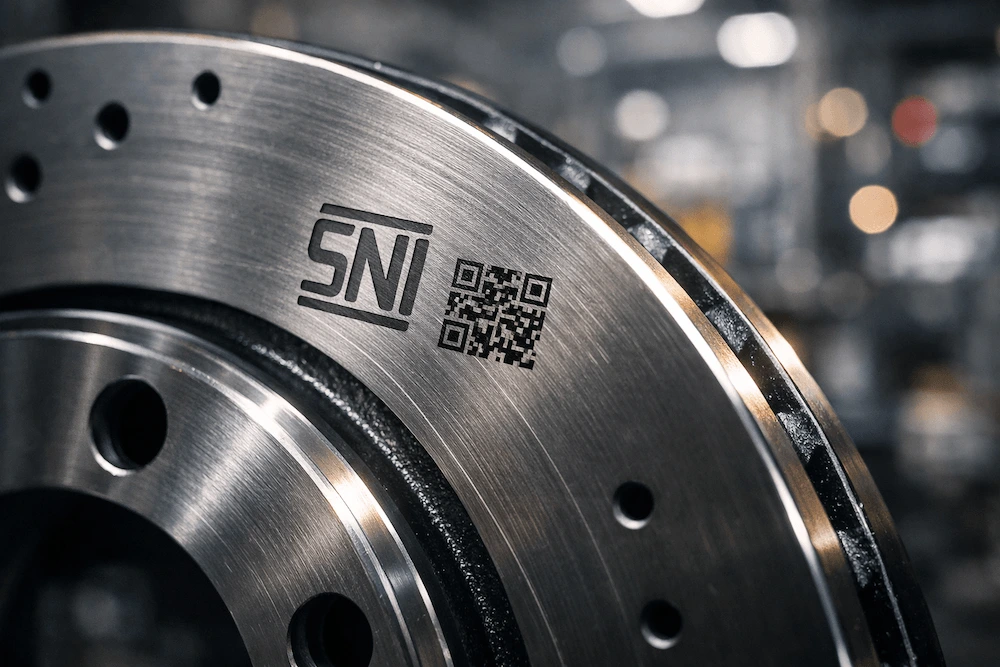
Since 2024, the Ministry of Industry has been tightening the grip on product certification requirements, and the automotive sector sits right at the center of this shift. For foreign manufacturers of tires, rims, safety glass, lubricants, and other vehicle components, SNI certification for automotive parts Indonesia is no longer just a checkbox. It is a non-negotiable gateway to legal market access.
The stakes have changed. New regulations introduced in 2025 now require trademark registration, a bound local representative, and mandatory quality management systems before a single unit can be distributed in Indonesia. For companies planning their 2026 market entry or renewing existing certification, the time to act is now, not after the enforcement deadline passes.
Why Indonesia’s Automotive Market Demands Your Attention Right Now
Indonesia is the largest automotive market in Southeast Asia, with domestic vehicle sales consistently exceeding 1 million units annually. The country is also one of the fastest-growing markets for motorcycle components and replacement parts, driven by a two-wheeler population of over 120 million units.
This is not a fringe market. For global tire manufacturers, rim producers, and automotive component suppliers, Indonesia represents a strategic growth corridor. But entering it incorrectly can be costly.
Authorities conduct active market surveillance. Products found circulating without valid SNI marks are publicly seized and destroyed. The Indonesian Ministry of Industry treats non-compliance as a criminal matter, not a civil infraction.
The global trend toward stricter national product standards is accelerating, and Indonesia is deliberately aligning its framework with international quality benchmarks while reinforcing its own enforcement mechanisms. For foreign manufacturers accustomed to CE, E-mark, or DOT certification, Indonesia’s system has its own distinct requirements that cannot simply be substituted.
Understanding the Regulatory Framework: What the Law Actually Says
The primary regulatory basis for SNI in Indonesia sits under Government Regulation No. 102 of 2000 on National Standardization そして Government Regulation No. 20 of 2014 on Standardization and Conformity Assessment. These regulations designate the Badan Standardisasi Nasional (BSN) as the national standards body responsible for formulating and overseeing SNI.
For the automotive sector specifically, recent regulations have significantly updated the landscape:
Peraturan Menteri Perindustrian No. 9 of 2025 replaced the previously applicable Regulation No. 76/M-IND/PER/9/2015, specifically governing the mandatory implementation of SNI for tires. Under this new regulation, all tire products, whether domestically produced or imported, must comply with the Type 5 certification scheme. This includes a factory audit, implementation of ISO 9001:2015 or IATF 16949:2016, and laboratory product testing based on SNI 98:2019 for passenger car tires, among other applicable standards.
For vehicle rims, the regulations similarly mandate Type 5 compliance based on SNI 1896:2008 for categories M, N, and O, and SNI 4658:2015 for category L.
Products manufactured under older certification rules were given a one-year grace period from the enforcement date. For tires, that transition window closes in July 2026. Beyond that point, all products circulating in the Indonesian market must carry valid certification under the new framework.
As of early 2025, there are at least 18 SNI standards directly applicable to the automotive sector, with additional categories, including motor vehicle starter batteries and safety glass, expected to come into scope under mandatory certification in the near term.
The Core Problem: Why Foreign Manufacturers Get Stuck
Here is the reality that catches most foreign companies off guard.
Under Indonesia’s current regulatory framework, only an Indonesian business actor (Pelaku Usaha) can hold an SNI certificate. A foreign manufacturer, regardless of how large or how reputable, cannot apply for certification in its own name without a legal entity established in Indonesia.
This creates a structural requirement that many international manufacturers overlook entirely during their export planning phase.
There are three common paths available:
Path 1: Establish a PT PMA (Foreign-Owned Company) This gives the manufacturer direct ownership and control over the certificate. It is the strongest long-term option, but requires capital commitment, registration time, and operational setup. The SNI certificate is tied to this entity, which means the manufacturer controls its own market fate.
Path 2: Appoint an Indonesian Local Representative This allows the manufacturer to proceed without setting up a company. The local representative acts as the official certificate holder and authorized importer. This path is faster and requires less upfront investment, but the certificate is tied to the representative. If the business relationship ends, the certification process may need to restart entirely with a new partner.
Path 3: Brand Cooperation (Kerja Sama Merek / KSM) Under newer SNI regulations, overseas manufacturers can work with a local Indonesian producer under a brand cooperation model, similar to OEM arrangements. This is a more complex pathway relevant for manufacturers with contract manufacturing interests in Indonesia.
Beyond the entity requirement, there is another timeline-sensitive requirement that surprises many applicants: trademark registration at Indonesia’s Directorate General of Intellectual Property (DGIP) is now a mandatory prerequisite for SNI certification, following updates under PP 28 of 2021 and reiterated in 2024 to 2025 regulatory revisions. The trademark registration process alone takes approximately 18 months to complete.
This means that manufacturers who have not yet initiated trademark filing could face a structural delay of 18 months before they can even proceed to the full certification application stage.
The SNI Type 5 Process: What Foreign Automotive Manufacturers Should Expect
For mandatory automotive products, including tires and vehicle rims, only the Type 5 Certification Scheme applies. There is no lighter Type 1b batch option for these categories.
The Type 5 process involves the following key stages:
Stage 1: Prerequisites Confirm that the product falls under mandatory SNI by identifying the applicable SNI standard and HS code. Determine the certificate holder (local entity or representative). Ensure DGIP trademark registration is in order or filed.
Stage 2: Select an Accredited Laboratory The testing laboratory must be accredited by the National Accreditation Committee (KAN).
Stage 3: Factory Audit and Product Testing at the applicant’s cost, to conduct a full audit of the production process, quality management system, and traceability records, product samples are drawn and tested against Indonesian standards at a KAN-accredited laboratory.
Stage 4: Certificate Issuance Upon successful audit and testing, the local representative can apply for the SPPT-SNI, which is the certificate authorizing use of the SNI logo and legal distribution in Indonesia.
Stage 5: Annual Surveillance Certification is valid for up to four years, subject to annual surveillance audits and periodic product testing to confirm continued compliance.
It is worth noting that Indonesia does not automatically accept foreign laboratory test reports. Companies relying on CE, E-mark, or other internationally recognized certifications should not assume these will transfer. Indonesian-accredited testing is required.
SNI Certification Pathways: A Strategic Comparison
| Factor | PT PMA (Own Entity) | Local Representative |
| Certificate Ownership | Manufacturer controls | Representative holds |
| Setup Time | 3 to 6 months for entity | Faster market entry |
| Cost | Higher upfront investment | Lower initial outlay |
| IP Control | Stronger | Dependent on relationship |
| Market Exit Risk | Lower | 適度 |
| Best for | Long-term market strategy | Market testing phase |
There is no universally superior option. The right path depends on the manufacturer’s volume commitment, brand control priorities, and long-term investment horizon in Indonesia.
Common Mistakes Foreign Manufacturers Make
1. Assuming international certifications are transferable CE, DOT, E-mark, and ISO certifications are respected globally, but they do not substitute for SNI in Indonesia. All applicable testing must be conducted in KAN-accredited Indonesian laboratories.
2. Starting the trademark process too late Trademark registration is a prerequisite, not a parallel process. Delaying this step delays everything downstream.
3. Choosing a local representative without a proper legal agreement If the representative holds the certificate and the relationship ends, the manufacturer may lose access to the certification they funded. A clear contractual framework covering certificate ownership, transition rights, and responsibilities is essential.
4. Underestimating the factory audit scope Indonesian auditors look for traceability records and quality manual documentation that may differ significantly from European or US requirements. Preparation is necessary.
5. Ignoring the local product holder requirement for importation Even after the SNI certificate is secured, a valid Import License tied to the certificate holder’s NIB (Business Identification Number) through the OSS (Online Single Submission) system is required for actual customs clearance.
How BusinessHubAsia Supports Foreign Manufacturers
For foreign manufacturers navigating this process, having a reliable local partner who understands both the regulatory landscape and the practical realities of the Indonesian market makes a measurable difference.
BusinessHubAsia (PT Bisnis Hub Asia) provides a full-service SNI registration and local license holder service, designed specifically for overseas manufacturers who need a compliant, trusted Indonesian entity to hold their certificate and represent their brand in the Indonesian market.
Their services cover the end-to-end SNI process, from initial regulatory assessment and trademark filing support, to factory audit preparation, and ongoing annual surveillance management. For manufacturers who do not yet have an Indonesian entity, BusinessHubAsia acts as the official local representative and certificate holder, so the product enters the market with full legal standing.
Beyond SNI, ビジネスハブアジア also offers import licensing, importer of record services, and broader market entry support covering product registration across other regulated categories including cosmetics, food, medical devices, and consumer goods.
The company operates from Indonesia and brings direct knowledge of how Indonesian certification bodies, trademark authorities, and customs processes interconnect, an insight that frequently saves manufacturers both time and cost during the certification process.
Is This Service Right for Your Business?
This pathway is most relevant for:
- Foreign tire manufacturers, rim producers, or automotive component suppliers planning to distribute in Indonesia from 2025 onward
- Overseas manufacturers currently certified under older SNI frameworks who need to transition to the 2025 regulations before the enforcement deadline
- Companies that have been exporting to Indonesia through distributors and now need to formalize certification under the local representative model
- Manufacturers exploring Indonesia as a new market who need a regulatory assessment before committing to a full market entry investment
If any of these situations apply, the prudent next step is a regulatory mapping exercise to determine exactly which SNI standards apply to the product, what the current certification status is, and what the fastest compliant path to market looks like.
Closing: The Window Is Narrowing
Indonesia’s automotive aftermarket and OEM component supply chain represents one of the most significant commercial opportunities in Southeast Asia. But the regulatory framework governing market access is not static, and it is not forgiving.
The 2025 to 2026 regulatory cycle has introduced the most substantive changes to SNI requirements for automotive products in over a decade. Manufacturers who move early will secure compliance, protect their market position, and avoid the operational disruption that comes with last-minute scrambles to meet enforcement deadlines.
Those who wait may find the window has already closed.
BusinessHubAsia is available to support manufacturers at every stage of this process, whether the immediate need is a regulatory assessment, trademark filing, full SNI certification management, or ongoing compliance maintenance. Contact us via form below to start a no-obligation market entry discussion with their regulatory team.

記事執筆者
ファフリ・ラマンダ・プトラ
ファリ・ラマンダ・プトラは、インドネシアの規制関連業務において10年以上の専門知識を持つ一流の法律コンサルタントです。彼は、多国籍企業の複雑なライセンス取得とコンプライアンスを支援し、円滑な事業運営の成功を確実なものにすることを専門としています。.
市場の洞察を常に最新の状態に保つ
私たちのチームに連絡してください
弊社が貴社の会社設立や拡大にどのように貢献できるかお知らせください。
自信を持って東南アジア市場への参入を始めましょう
Business Hub Asiaは、事業ライセンスや製品登録から従業員管理まで、インドネシア、ベトナム、フィリピンの規制遵守をお手伝いします。効率的で正確、そしてビジネス重視のアプローチでサポートいたします。
免責事項
このウェブサイトで提供されるコンテンツは、 PT. ビジネスハブアジア (“「“私たちは"、 または "私たち(以下「本サイト」といいます)は、一般的な情報提供のみを目的としています。掲載情報の正確性と最新性を確保するため、当社はあらゆる努力を払っておりますが、本サイトに掲載されているコンテンツ、製品、またはサービスの完全性、正確性、信頼性、適合性、または可用性について、明示的または黙示的を問わず、いかなる表明または保証も行いません。当該情報への依拠は、ユーザーご自身の責任において行っていただきますようお願いいたします。
私たちは 民間の独立団体 そして 提携関係にない, 承認者、 または 代理として行動する インドネシア共和国政府、その省庁、機関、または公式に任命された代表者。本ウェブサイトは ない 以下を含むがこれに限定されない、政府の公式文書またはサービスを提供、提供、または宣伝すること:
企業識別番号 (Nomor Induk Berusaha – NIB);
税金の還付または払い戻し。
滞在許可証または電子渡航認証。
パスポートまたはその他の入国関連書類。
かかるサービスへの言及は、一般的な情報提供のみを目的としており、公式サービスの提供または促進として解釈されるべきではありません。
当社は、お客様の個人情報を以下のとおり保護することに尽力しております。 2022年個人情報保護法第27号当ウェブサイトを通じて収集された個人情報は、[プライバシーステートメント]に明記されている目的のために処理されます。いかなる状況においても、個人データを販売または悪用することはありません。
本ウェブサイトにアクセスし、本ウェブサイトを利用することにより、お客様は本免責事項に定められた条件を承認し、同意するものとします。また、お客様は本ウェブサイトおよび提供される情報を、適用される法令を遵守し、責任を持って利用することに同意するものとします。
この免責事項に関する詳しい情報やご質問については、お問い合わせページに記載されているチャネルを通じて当社までご連絡ください。
あなたも気に入るかもしれない
東南アジアでのビジネスに関する最新の洞察、ガイド、記事で最新情報を入手してください。
SNI Registration
How to Appoint an Importer of Record for SNI Certification in Indonesia: A Foreign Manufacturer’s Guide
Fahri Ramanda Putra • 4月 28, 2026
SNI Registration
SNI Certification for Building Materials in Indonesia: The Ultimate 2026 Guide
Fahri Ramanda Putra • 4月 22, 2026
SNI Registration
Introduction: Why SNI Certification Is the Key to Indonesia’s Consumer Market
Fahri Ramanda Putra • 4月 22, 2026