







SNI Certification for Building Materials in Indonesia: The Ultimate 2026 Guide
4月 22, 2026
•
6分で読めます

コンテンツ
導入
For any business supplying, importing, or distributing construction products in Southeast Asia’s largest economy, understanding SNI certification for building materials in Indonesia is no longer a nice-to-have. It is a legal requirement.
In 2026, Indonesia’s regulatory environment has grown more rigorous, more digitized, and more strictly enforced than ever before, driven by large-scale national infrastructure investments such as the development of the new capital city, Nusantara (IKN).
Why SNI Certification for Building Materials in Indonesia Is Non-Negotiable in 2026
Indonesia’s construction sector is expanding rapidly. The government’s continued push to develop IKN and to accelerate nationwide infrastructure projects has raised the bar for quality assurance across the supply chain.
At the center of this quality push is the SNI (Standar Nasional Indonesia, or Indonesian National Standard), a certification framework administered jointly by the National Standardization Agency (Badan Standardisasi Nasional, or BSN) and overseen by the Ministry of Industry (Kemenperin).
In 2026, the Indonesian government updated its seismic and earthquake resistance standards under SNI 9274:2025, which has placed additional technical obligations on structural construction materials. Indonesia sits on the Pacific Ring of Fire and experiences significant seismic activity. It is therefore no surprise that the government treats structural material quality as a matter of public safety, not just market regulation.
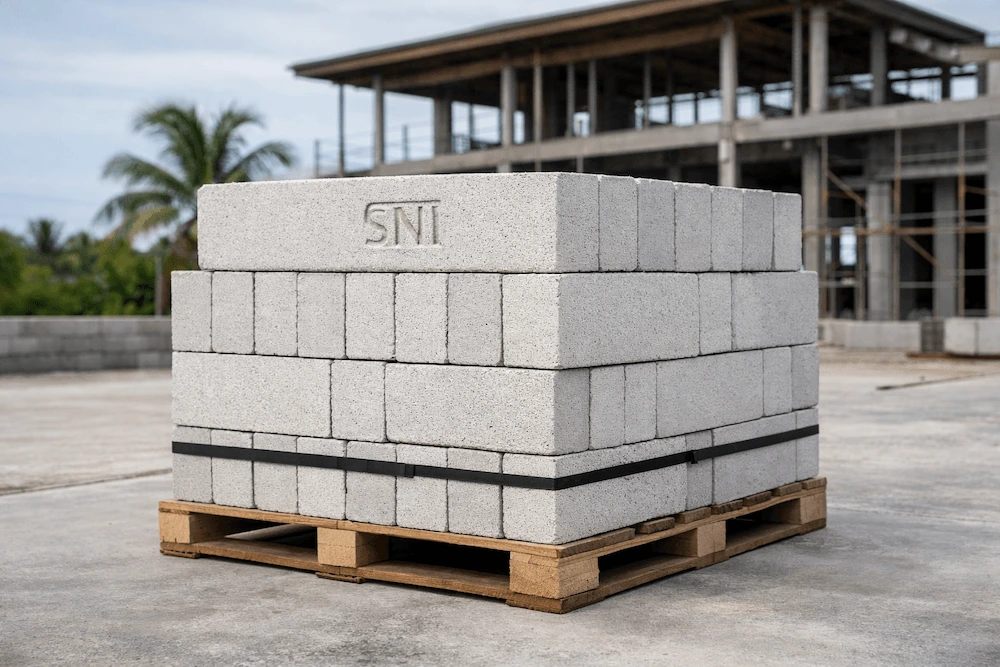
For businesses supplying the Indonesian market, SNI certification for building materials in Indonesia represents the foundational credential that allows products to be sold legally and confidently. Without it, products may be seized at the port of entry, removed from retail shelves, or blacklisted from public procurement contracts.
Beyond legal consequences, the reputational damage of being associated with non-compliant materials in a safety-sensitive industry is extremely difficult to recover from.
Which Building Materials Require Mandatory SNI Certification in Indonesia?
Not all products require mandatory SNI status. Some categories carry voluntary SNI marks, meaning manufacturers may choose to certify for competitive advantage.
However, a growing list of building materials falls under mandatory SNI, which means compliance is legally required before products may enter the Indonesian market.
Based on the latest directives from Kemenperin and BSN, the following categories require mandatory SNI certification for building materials in Indonesia in 2026:
| Product Category | Key Mandatory Products |
| Structural Steel | Reinforcing steel bars (baja tulangan beton), cold-rolled steel sheets |
| Cementing Materials | Portland cement, hydraulic cement, composite cement |
| Ceramics and Glass | Ceramic tiles (ubin keramik), toughened and laminated safety glass |
| Piping Systems | PVC pipes for drinking water and wastewater |
| Electrical Equipment | Power cables, circuit breakers (MCB), wall switches |
| Safety Systems | Fire sprinkler systems (updated under 2025/2026 regulations) |
This list is not exhaustive, and product-specific classifications can shift as new regulations are introduced.
Businesses are advised to verify the current mandatory SNI list directly with BSN or through an authorized compliance consultant before entering the Indonesian market.
The 2026 SNI Certification Process for Building Materials in Indonesia: Step by Step
The process for obtaining SNI certification for building materials in Indonesia follows a structured, multi-stage pathway.
In 2026, this pathway was largely digitized and integrated into national government platforms, making it both more accessible for foreign applicants and more traceable for regulators.
Step 1: NIB Registration and SIINas Account Setup
The process begins with the applicant’s NIB (Nomor Induk Berusaha, or Business Identification Number), which is obtained through Indonesia’s OSS RBA (Online Single Submission Risk-Based Approach) portal. This number is the anchor for all official business activity in Indonesia.
Once the NIB is confirmed, the applicant must register on SIINas (Sistem Informasi Industri Nasional), the national industrial information system managed by Kemenperin.
SIINas serves as the primary gateway for all technical submissions related to product certification. The applicant’s KBLI (Klasifikasi Baku Lapangan Usaha Indonesia, or Indonesian Standard Business Classification) code must accurately reflect the product being certified.
Step 2: Factory Audit and Quality Management System Verification
Auditors will verify compliance with ISO 9001:2015 (or an equivalent standard), examining the entire production process from raw material sourcing to finished product testing. The audit is comprehensive and includes documentation review, on-site (or remote) inspections, and interviews with production personnel.
Step 3: Laboratory Sample Testing
Physical product samples are drawn by the auditors and sent to a KAN-accredited testing laboratory in Indonesia for independent analysis. An important update for 2026 is that structural steel and concrete components must now pass specific seismic performance tests in line with the updated SNI 9274:2025 standards. This is an additional layer of scrutiny that manufacturers of structural materials should prepare for well in advance.
Step 4: SPPT SNI Issuance
If both the audit and the laboratory test results meet the required standards. This is the official certificate that authorizes the manufacturer to affix the SNI logo to their product and market it legally in Indonesia. The certificate is time-limited and subject to periodic surveillance audits to ensure ongoing compliance.
How SNI Certification in Indonesia Has Gone Digital in 2026
One of the most significant shifts in 2026 is the full integration of SNI certification for building materials in Indonesia into digital government platforms. Paper-based applications are largely phased out. All document submissions, status tracking, and regulatory correspondence now flow through SIINas and the OSS RBA system.
This digital transformation benefits foreign applicants in several ways. It reduces the need for physical presence at government offices, enables real-time tracking of certification status, and provides a single dashboard for managing multiple product certifications. However, it also demands a higher level of digital readiness from applicants.
Data accuracy in the SIINas platform is critical, and errors in KBLI classification or business profile information can delay the entire process significantly.
The Consequences of Non-Compliance with SNI Certification Standards
The stakes for missing mandatory SNI certification for building materials in Indonesia are serious and multifaceted. The Indonesian government has significantly tightened border controls and market surveillance to protect the integrity of construction projects across the country.
Non-compliant products may face customs seizure upon arrival in Indonesian ports. Those that make it through the border without detection risk being pulled from distribution channels during market surveillance inspections. In cases of repeat violations, the business entity behind the non-compliant products may be blacklisted from future participation in government procurement, which represents a major share of the Indonesian construction market.
Beyond enforcement action, the reputational consequences in a safety-sensitive industry are long-lasting. Investors, contractors, and property developers in Indonesia increasingly demand proof of SNI certification before finalizing supplier agreements.
How Foreign Manufacturers Can Navigate SNI Certification for Building Materials in Indonesia
Foreign manufacturers entering the Indonesian market face additional layers of complexity, including language barriers, unfamiliarity with local administrative processes, and the logistical challenge of coordinating audits across international borders. However, the pathway is well-defined and achievable with proper preparation.
Working with an experienced local compliance consultant or authorized local representative can significantly reduce the time and cost involved. These professionals understand the nuances of the SIINas platform and can manage documentation requirements on behalf of the overseas principal.
Foreign manufacturers should also invest in aligning their existing quality management systems with ISO 9001:2015 requirements well before initiating the SNI certification process. Those whose products fall under structural or seismic-sensitive categories should conduct internal pre-assessments against SNI 9274:2025 to identify any gaps before the formal audit.
Conclusion: Making SNI Certification Work for Your Business in Indonesia
The Indonesian construction market offers substantial opportunities for quality-focused manufacturers and investors. However, navigating SNI certification for building materials in Indonesia is an essential step that cannot be bypassed or delayed. In 2026, the process is more digitized, more traceable, and more rigorously enforced than at any previous point.
The good news is that the framework is clear and well-documented. Businesses that invest in understanding mandatory SNI requirements, preparing their quality management systems, and engaging with the SIINas platform will find a structured, achievable path to market entry.
For businesses that need support with SNI certification for building materials in Indonesia, Business Hub Asia’s compliance specialists are available to guide manufacturers and distributors through each stage of the process. Starting early and starting correctly are the two most important decisions any business can make in this space.

記事執筆者
ファフリ・ラマンダ・プトラ
ファリ・ラマンダ・プトラは、インドネシアの規制関連業務において10年以上の専門知識を持つ一流の法律コンサルタントです。彼は、多国籍企業の複雑なライセンス取得とコンプライアンスを支援し、円滑な事業運営の成功を確実なものにすることを専門としています。.
市場の洞察を常に最新の状態に保つ
よくある質問
What is SNI certification for building materials in Indonesia?
SNI stands for Standar Nasional Indonesia, the country’s official national standard framework. SNI certification for building materials in Indonesia is the process by which a product is tested, audited, and verified to meet the technical requirements set by BSN and Kemenperin. For mandatory SNI categories, this certification is a legal prerequisite for selling or distributing a product in Indonesia.
Which government agencies are responsible for SNI certification in Indonesia?
The National Standardization Agency (BSN) is responsible for developing and publishing SNI standards. The Ministry of Industry (Kemenperin) enforces mandatory SNI requirements and manages the SIINas platform.
How long does the SNI certification process typically take?
The timeline varies depending on the product category, the complexity of the factory audit, and the laboratory testing schedule. On average, foreign manufacturers can expect the process to take between three and six months from the initial application to SPPT SNI issuance. Delays commonly arise from documentation errors, KBLI misclassification, or laboratory backlogs. Engaging an experienced local compliance consultant can help keep the process on track.
Can foreign manufacturers obtain SNI certification without a physical presence in Indonesia?
Yes, in 2026 this has become more accessible. However, the applicant still needs a valid NIB and a registered entity or local representative to manage submissions on the SIINas platform.
What happens if a building material product is found to be non-compliant after entering the Indonesian market?
Products found to be non-compliant may be seized by authorities, removed from retail or distribution channels, and banned from future importation. The business entity involved may also face financial penalties and potential blacklisting from government procurement programs. In cases involving structural materials where safety is implicated, the consequences may be even more severe.
Are there any new SNI requirements specifically for 2026 that manufacturers should be aware of?
Yes. Two key updates are relevant in 2026. First, structural steel and concrete components are now subject to additional seismic performance testing under the updated SNI 9274:2025 earthquake resistance standards. Second, fire sprinkler systems have been updated under new 2025/2026 regulations, meaning manufacturers in this category need to verify their products against the revised standard before applying for or renewing certification.
s ISO 9001:2015 certification required as part of the SNI certification process?
While ISO 9001:2015 is not always a mandatory standalone requirement, auditors conducting the factory assessment as part of the SNI certification process will evaluate whether the manufacturer’s quality management system meets its principles or an equivalent standard. Having ISO 9001:2015 certification in place significantly streamlines the audit process and demonstrates a credible baseline of quality assurance.
私たちのチームに連絡してください
弊社が貴社の会社設立や拡大にどのように貢献できるかお知らせください。
自信を持って東南アジア市場への参入を始めましょう
Business Hub Asiaは、事業ライセンスや製品登録から従業員管理まで、インドネシア、ベトナム、フィリピンの規制遵守をお手伝いします。効率的で正確、そしてビジネス重視のアプローチでサポートいたします。
免責事項
このウェブサイトで提供されるコンテンツは、 PT. ビジネスハブアジア (“「“私たちは"、 または "私たち(以下「本サイト」といいます)は、一般的な情報提供のみを目的としています。掲載情報の正確性と最新性を確保するため、当社はあらゆる努力を払っておりますが、本サイトに掲載されているコンテンツ、製品、またはサービスの完全性、正確性、信頼性、適合性、または可用性について、明示的または黙示的を問わず、いかなる表明または保証も行いません。当該情報への依拠は、ユーザーご自身の責任において行っていただきますようお願いいたします。
私たちは 民間の独立団体 そして 提携関係にない, 承認者、 または 代理として行動する インドネシア共和国政府、その省庁、機関、または公式に任命された代表者。本ウェブサイトは ない 以下を含むがこれに限定されない、政府の公式文書またはサービスを提供、提供、または宣伝すること:
-
企業識別番号 (Nomor Induk Berusaha – NIB);
-
税金の還付または払い戻し。
-
滞在許可証または電子渡航認証。
-
パスポートまたはその他の入国関連書類。
かかるサービスへの言及は、一般的な情報提供のみを目的としており、公式サービスの提供または促進として解釈されるべきではありません。
当社は、お客様の個人情報を以下のとおり保護することに尽力しております。 2022年個人情報保護法第27号当ウェブサイトを通じて収集された個人情報は、[プライバシーステートメント]に明記されている目的のために処理されます。いかなる状況においても、個人データを販売または悪用することはありません。
本ウェブサイトにアクセスし、本ウェブサイトを利用することにより、お客様は本免責事項に定められた条件を承認し、同意するものとします。また、お客様は本ウェブサイトおよび提供される情報を、適用される法令を遵守し、責任を持って利用することに同意するものとします。
この免責事項に関する詳しい情報やご質問については、お問い合わせページに記載されているチャネルを通じて当社までご連絡ください。
あなたも気に入るかもしれない
東南アジアでのビジネスに関する最新の洞察、ガイド、記事で最新情報を入手してください。
SNI Registration
Introduction: Why SNI Certification Is the Key to Indonesia’s Consumer Market

Fahri Ramanda Putra • 4月 22, 2026
SNI Registration
SNI Certification for Automotive Parts Indonesia: What Every Foreign Manufacturer Must Do In 2026

Fahri Ramanda Putra • 4月 15, 2026
Product Registration, SNI Registration
Indonesia Product Certification 2026: SNI, BPOM, and Halal Requirements Explained

Fahri Ramanda Putra • 4月 14, 2026