








后退

Types of KITAS in Indonesia: The Complete Guide for Expats and Foreign Nationals

3 月 30, 2026

阅读时间:7分钟

Types of KITAS in Indonesia: Complete Guide for Foreigners (2026)

内容

Indonesia continues to attract a growing number of expatriates, entrepreneurs, healthcare professionals, and retirees seeking new opportunities in Southeast Asia. For anyone planning a long-term stay, understanding the types of KITAS in Indonesia is not just helpful; it is essential. The right permit determines legal standing, employment eligibility, and the overall quality of life in the country.

This guide provides a thorough and authoritative breakdown of KITAS 印尼, covering each category, key requirements, and how to select the most appropriate permit for any situation.

What Is KITAS in Indonesia?

Before exploring the different categories, it helps to answer a foundational question: what is KITAS in Indonesia?

KITAS stands for Kartu Izin Tinggal Terbatas, which translates to “Limited Stay Permit.” It is the official document that allows foreign nationals to reside in Indonesia legally for a defined period. A standard KITAS 印尼 is typically valid for six months to two years and is renewable, depending on the category and the applicant’s circumstances.

The process generally begins with a VITAS (Limited Stay Visa), which is issued by an Indonesian consulate or embassy abroad. Once the holder enters Indonesia, the VITAS is converted into a KITAS Visa Indonesia through the Directorate General of Immigration. This two-step process is standard across most permit types.

Understanding this framework is particularly relevant for international businesses, foreign medical device manufacturers, and healthcare companies expanding into Southeast Asia, as different KITAS categories carry different rights and restrictions.

The Main Types of KITAS in Indonesia

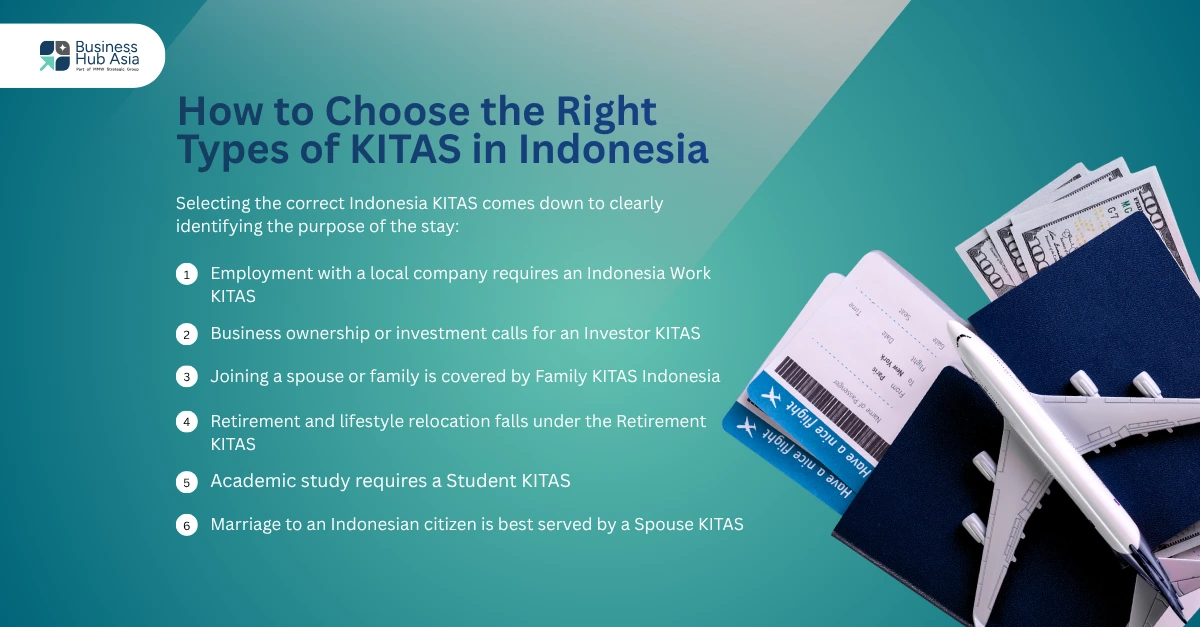
There are several distinct types of KITAS in Indonesia, each designed to serve a specific purpose. Below is a detailed breakdown of the most important categories available to foreign nationals.

1. Indonesia Work KITAS

Indonesia Work KITAS is the most widely used permit among foreign professionals employed by Indonesian companies. To qualify, an Indonesian employer must sponsor the applicant and obtain a work permit (IMTA) on their behalf before the KITAS can be issued.

This permit is particularly relevant for skilled professionals, executives, technical specialists, and consultants working in regulated industries such as healthcare, manufacturing, and technology.

Key features:

  • Valid for 6 to 12 months, with renewal options
  • Requires employer sponsorship
  • Restricted to specific job titles and roles as defined in the work permit
  • Carries tax obligations under Indonesian law

For foreign medical device manufacturers and distributors entering Indonesia, this is typically the permit their employed representatives will hold. It ensures legal compliance and facilitates smooth engagement with local partners and regulatory bodies such as BPOM (the National Agency of Drug and Food Control).

2. Investor KITAS

投资者 KITAS is designed for foreign nationals who hold shares or ownership stakes in Indonesian companies. Unlike the Work KITAS, this category often does not require a separate work permit (IMTA), making it one of the more flexible types of KITAS in Indonesia for business owners and entrepreneurs.

Key features:

  • Valid for one to two years
  • Does not require an IMTA in many cases
  • Permits business ownership and management activities
  • Requires verifiable shareholding in a legally registered Indonesian company

Healthcare companies expanding to Southeast Asia and foreign investors establishing a local entity (such as a PT PMA, or foreign-owned limited liability company) frequently rely on this category. It enables direct involvement in day-to-day business operations while maintaining full legal residency status.

3. Family KITAS Indonesia

Family KITAS Indonesia accommodates foreign nationals joining immediate family members who are legally residing in Indonesia. This category covers two primary situations:

  • Spouses of Indonesian citizens
  • Children of current KITAS holders

Key features:

  • Valid for up to one year, renewable
  • Sponsored by the Indonesian spouse or KITAS-holding parent
  • Does not automatically grant employment rights

This type of KITAS Visa Indonesia is ideal for families relocating together. It is worth noting that employment requires a separate authorization; the Family KITAS alone does not permit the holder to work commercially in Indonesia.

4. Retirement KITAS

The Retirement KITAS is available to foreign nationals aged 55 and above who wish to settle in Indonesia after their working years. This category is particularly popular in Bali, Lombok, and other lifestyle destinations.

Key features:

  • Valid for one year, with annual renewals
  • Requires documented proof of pension or consistent passive income
  • Holders must employ at least one local domestic worker
  • Employment in Indonesia is not permitted under this category

While this category does not apply directly to corporate or professional applicants, it is relevant to casual readers exploring long-term residency options in Indonesia.

5. Student KITAS

International students enrolled in accredited Indonesian educational institutions may apply for a Student KITAS. This permit ties directly to the duration of the study program.

Key features:

  • Valid for the duration of the enrolled study program
  • Sponsored by the educational institution
  • Employment is not permitted

This remains one of the more specialized types of KITAS in Indonesia and is largely self-explanatory in its eligibility and use.

6. Spouse KITAS (Marriage-Based Permit)

The Spouse KITAS is a subset of Family KITAS Indonesia, specifically issued to foreign nationals who are legally married to Indonesian citizens. It is worth distinguishing from the standard Family KITAS because it carries an additional long-term benefit: eligibility for conversion to a KITAP (Permanent Stay Permit) after a qualifying period of residence.

Key features:

  • Sponsored by the Indonesian spouse
  • May allow limited work rights under certain conditions
  • Eligible for KITAP conversion after several years of continuous residence

Indonesia KITAS is frequently used by foreign nationals seeking a clear, long-term immigration pathway in Indonesia.

7. Digital Nomad KITAS (Emerging Category)

Indonesia has been developing a framework for remote workers and digital nomads, particularly following global shifts in how knowledge workers operate. While a fully formalized Digital Nomad KITAS has been in discussion, this category represents a significant emerging option.

Key features:

  • Intended for remote workers earning income from foreign clients or employers
  • Local employment in Indonesia is not permitted
  • Proof of consistent income from abroad is required

Although this category is still evolving within Indonesian immigration policy, it signals an important direction for the country’s residency framework and may become one of the most in-demand types of KITAS in Indonesia in the near future.

General Requirements for KITAS Indonesia

While specific documentation varies by category, most KITAS 印尼 applications share a common set of requirements:

  • A valid passport with sufficient remaining validity
  • A sponsor letter from the relevant individual or company
  • Completed immigration application forms
  • Financial documentation proving adequate funds or income
  • Supporting permits, such as an IMTA for work-related applications

The process typically begins offshore with the VITAS application and concludes with the formal issuance of the Indonesia KITAS after arrival and in-country processing.

Benefits of Holding a KITAS in Indonesia

持有有效 KITAS Visa Indonesia provides foreign nationals with meaningful practical advantages beyond simply residing legally in the country. These include:

  • The ability to open personal bank accounts with major Indonesian banks
  • Access to local healthcare facilities and government services
  • Eligibility to obtain an Indonesian driver’s license
  • A streamlined process for annual renewals and permit extensions
  • Legal protection under Indonesian residency regulations

For holders of an Indonesia Work KITAS, the permit also establishes the legal right to receive compensation from an Indonesian employer, which is critical for compliance with both immigration and tax law.

KITAS vs. KITAP: Understanding the Difference

When exploring what is KITAS in Indonesia, it is equally important to understand its long-term counterpart: KITAP (Kartu Izin Tinggal Tetap), or Permanent Stay Permit.

KITAS: A temporary stay permit valid for six months to two years, subject to regular renewal.

KITAP: A permanent stay permit valid for up to five years, available to individuals who have held a KITAS 印尼 for a qualifying period (typically five consecutive years in most categories).

For foreign nationals committed to long-term residency, planning the transition from KITAS 印尼 to KITAP is a strategic consideration that should be factored into any immigration roadmap.

Getting this selection right from the beginning avoids compliance issues, unnecessary administrative costs, and potential disruptions to residency status.

结论

Indonesia offers a well-structured and accessible residency framework for foreign nationals through its various types of KITAS in Indonesia. Whether the goal is professional employment, business investment, family reunification, academic study, or retirement, there is a KITAS Visa Indonesia tailored to that specific situation.

For foreign medical device manufacturers, distributors, and healthcare companies entering the Indonesian market, understanding KITAS 印尼 is a practical first step toward building a compliant and sustainable presence in the country. By identifying the correct category and meeting the relevant requirements, foreign nationals can ensure a lawful, well-documented, and productive stay in one of Southeast Asia’s most dynamic economies.

Edy 是 Business Hub Asia 的首席运营官,在法律、合规和外国投资方面拥有 20 多年的经验,领导着印尼和东南亚的运营和监管战略。.

随时掌握市场动态

订阅电子报表格

常见问题

What is KITAS in Indonesia, and who needs one?

KITAS stands for Kartu Izin Tinggal Terbatas, or Limited Stay Permit. Any foreign national intending to live in Indonesia for more than 60 days typically needs a KITAS Indonesia to remain in the country legally. This includes workers, investors, spouses of Indonesian citizens, students, and retirees.

What is the difference between a VITAS and a KITAS Visa Indonesia?

A VITAS (Limited Stay Visa) is issued by an Indonesian embassy or consulate before arrival. Upon entering Indonesia, the VITAS is converted into a KITAS Visa Indonesia through the local immigration office. The VITAS is essentially the entry authorization; the KITAS is the in-country residency permit.

Can holders of a Family KITAS Indonesia work legally?

Not automatically. A Family KITAS Indonesia does not inherently grant employment rights. Holders who wish to work must obtain a separate work permit (IMTA) and convert their permit to an Indonesia Work KITAS or obtain additional authorization, depending on their specific situation.

How long does it take to process an Indonesia Work KITAS?

Processing times vary depending on the sponsoring company’s documentation, the regional immigration office, and current processing volumes. In general, applicants should anticipate a process spanning several weeks from the initial work permit application to the final issuance of the Indonesia Work KITAS.

Can a foreign investor in Indonesia hold an Investor KITAS without a separate work permit?

In many cases, yes. The Investor KITAS is designed to allow business ownership and management activities without requiring a separate IMTA (work permit). However, the specific requirements depend on the structure of the company and the investor’s role. Legal consultation is recommended before applying.

What is the path from KITAS Indonesia to KITAP?

After holding a KITAS Indonesia for a qualifying period, generally five consecutive years for most categories, foreign nationals may become eligible to apply for a KITAP (Permanent Stay Permit). Spouse KITAS holders may qualify on a shorter timeline. KITAP offers a validity of up to five years and significantly reduces the administrative burden of annual renewals.

Are there specific types of KITAS in Indonesia relevant to the healthcare or medical device industry?

Yes. Foreign professionals employed by medical device distributors or healthcare companies typically hold an Indonesia Work KITAS, sponsored by their local employer. Investors or directors of a PT PMA (foreign-owned company) in the healthcare sector commonly use an Investor KITAS. The appropriate category depends on the individual’s role, employment arrangement, and business structure within Indonesia.

联系我们的团队

请让我们知道我们如何协助您的公司成立或扩张。

联系表格
请使用公司邮箱提交,以便更快得到回复和优先处理。.
联系表格(中文)
请使用公司邮箱提交,以便更快得到回复和优先处理。.

自信地进入东南亚市场

亚洲商业中心随时准备帮助您了解印度尼西亚、越南和菲律宾的法规,涵盖从营业执照、产品注册到劳动力管理等各个方面。我们采用高效、准确且以业务为中心的方法。

免责声明

本网站提供的内容由 PT. Bisnis Hub Asia (我们“, 或者 ”我们”)仅供一般参考之用。尽管我们已尽一切努力确保所提供信息的准确性和及时性,但我们不对本网站所述任何内容、产品或服务的完整性、准确性、可靠性、适用性或可用性作出任何明示或暗示的陈述或保证。任何依赖此类信息的风险均由用户自行承担。

我们是一家 私人、独立实体 并且 不隶属于, 授权, 或者 代表 印度尼西亚共和国政府、其各部委、机构或任何官方指定的代表。本网站不 不是 提供、提供或推广任何官方政府文件或服务,包括但不限于:

  • 企业识别号(Nomor Induk Berusaha – NIB);

  • 退税或返还;

  • 居留许可或电子旅行授权;

  • 护照或其他与移民相关的文件。

对此类服务的任何引用仅供一般参考,不应被视为官方服务的提供或便利。

我们致力于确保按照以下规定保护您的个人数据 2022年第27号《个人数据保护法》任何通过本网站收集的个人信息,都将按照我们[隐私声明]中明确规定的用途进行处理。在任何情况下,我们都不会出售或滥用个人信息。

访问并使用本网站,即表示您确认并同意本免责声明中所列的条款。您进一步同意以负责任的方式使用本网站及其所提供的信息,并遵守适用的法律法规。

如需了解有关本免责声明的更多信息或有任何疑问,请通过我们的联系页面提供的渠道与我们联系。