







Singapore Company Incorporation: Branch, Subsidiary, or Representative Office?
8 月 14, 2026
•
阅读时间:6分钟


内容
介绍
For Indonesian companies, Singapore is the natural first step abroad. It sits just a short flight from Jakarta, ranks second globally in the 2025 IMD World Competitiveness Ranking, and serves as the region’s financial and trading hub. Many Indonesian groups use a Singapore entity to hold regional investments, access international banking and capital, build credibility with global customers, or manage export-import flows across ASEAN.
But before registering anything with ACRA, a foreign company must answer one key question: should you set up a branch office, a subsidiary, or a representative office? Each structure carries different consequences for liability, tax, compliance, and what activities you are allowed to conduct.
This guide, prepared in collaboration between Vivos, a trusted provider of incorporation services in Singapore, and 亚洲商业中心, breaks down the three options and helps Indonesian businesses decide which one fits their expansion goals.
What Are the Three Structures Available to Foreign Companies?
A foreign company (for example, an Indonesian PT or PT PMA) can establish a presence in Singapore in three ways:
- Subsidiary: A Singapore private limited company (Pte Ltd) incorporated under Singapore law, with the Indonesian parent as shareholder. It is a separate legal entity.
- Branch office: A registered extension of the Indonesian parent company. It can conduct business in Singapore but is not a separate legal entity: the parent remains fully liable.
- Representative office (RO): A temporary, non-commercial presence used for market research and liaison activities. It cannot generate revenue in Singapore.
If you are familiar with Indonesia’s own foreign investment regime, the logic is similar to choosing between a PT PMA and a KPPA. Vivos’ market entry advisory team can help you map the equivalent decision for Singapore.
How Does a Subsidiary (Pte Ltd) Work for Indonesian Companies?
The subsidiary is by far the most common choice for Indonesian companies committed to long-term operations in Singapore.
Key features:
- Limited liability: The Indonesian parent’s exposure is capped at its share capital. Singapore liabilities do not flow back to the parent’s balance sheet in Indonesia.
- Local tax residency: A subsidiary managed and controlled from Singapore is a Singapore tax resident, enjoying the flat 17% corporate tax rate, the startup tax exemption on early chargeable income, and access to Singapore’s wide tax treaty network, including the Indonesia–Singapore Double Taxation Agreement, which reduces withholding tax on dividends, interest, and royalties between the two countries.
- Access to incentives: Only locally incorporated companies qualify for most government grants, such as the Enterprise Development Grant (EDG) and Productivity Solutions Grant (PSG).
- Credibility: Banks, investors, and multinational customers generally prefer contracting with a Singapore Pte Ltd.
- 要求: At least one local resident director, a company secretary, a registered Singapore address, and minimum paid-up capital of S$1.
Best for: Indonesian companies building a regional headquarters, holding company, trading arm, or any revenue-generating operation intended to last.
When Does a Branch Office Make Sense?
A branch office registers the Indonesian parent company itself with ACRA, allowing it to carry out business activities in Singapore under the parent’s name.
Key features:
- No separate legal personality: The Indonesian parent is directly liable for all debts and obligations of the branch.
- Non-resident tax status: A branch is generally treated as a non-resident for tax purposes, so it typically cannot access Singapore’s tax treaties or local startup exemptions, though profits are still taxed at 17%.
- Reporting burden: The branch must file the parent company’s audited financial statements with ACRA annually, meaning your Indonesian accounts become part of the public record in Singapore.
- 要求: At least one locally resident authorised representative and a registered office address. The branch must use the same name as the parent.
Best for: Established Indonesian corporations (banks, insurers, and large trading firms are typical examples) that need to operate under the parent’s name and licence, or whose industry regulations favour a branch structure. For most SMEs, the unlimited liability and disclosure requirements make a subsidiary the safer choice.
What Can a Representative Office Do (and Not Do)?
A representative office is the lightest-touch option, registered through Enterprise Singapore rather than ACRA.
Permitted activities:
- Market research and feasibility studies
- Liaison with local partners, suppliers, and customers on behalf of the parent
- Overseeing the parent’s regional interests without concluding contracts
Restrictions:
- No revenue-generating activity: An RO cannot sign contracts, issue invoices, provide services for a fee, or lease warehousing.
- Time limit: Valid for one year, renewable up to a maximum of three years, after which it must upgrade to a branch or subsidiary or close.
- 合格: The parent must have sales turnover above US$250,000 and be at least three years old. Staff headcount is capped at five.
Best for: Indonesian companies testing the Singapore market before committing: for example, evaluating demand, scouting partners, or working with Vivos on a full company incorporation in Singapore.
Singapore Company Incorporation: Branch vs Subsidiary vs Representative Office Comparison
| Factor | Subsidiary (Pte Ltd) | 分公司 | 代表处 |
|---|---|---|---|
| Legal status | 独立的法律实体 | Extension of parent | No legal status |
| Parent liability | Limited to share capital | 无限 | Parent fully responsible |
| Allowed activities | Full business activities | Full business activities | Market research and liaison only |
| Revenue generation | 是的 | 是的 | 不 |
| Corporate tax | 17%, resident; eligible for exemptions and treaties | 17%, generally non-resident | Not applicable |
| Government grants | Eligible | Generally not eligible | Not eligible |
| Annual filing | Own audited/unaudited accounts | Parent’s audited accounts | Minimal |
| 期间 | Perpetual | Perpetual | Maximum 3 years |
| Registered with | ACRA | ACRA | Enterprise Singapore |
Which Structure Should an Indonesian Company Choose?
As a practical rule of thumb:
- Choose a subsidiary if you plan to sell, invest, hire, or hold assets in Singapore for the long term. The combination of limited liability, tax residency under the Indonesia–Singapore tax treaty, and grant eligibility makes it the default for most Indonesian businesses.
- Choose a branch only if regulatory or group-structure reasons require operating directly under the Indonesian parent’s name, and you are comfortable with unlimited liability and public filing of the parent’s accounts.
- Choose a representative office if you are still validating the market and will not earn revenue in Singapore within the next one to three years.
Many Indonesian groups also run a two-way structure: a Singapore holding subsidiary that owns the Indonesian operating company (PT PMA), improving access to international financing while keeping operations onshore in Indonesia. If you are structuring in the other direction, Vivos’ SE Asia expansion advisory can help with the cross-border side of the arrangement.
结论
There is no single “best” structure: only the one that matches your liability appetite, tax position, and stage of expansion. A subsidiary offers the strongest foundation for growth, a branch suits large corporations with specific regulatory needs, and a representative office is a low-risk way to explore the market.
凭借以下各方的专业知识: 维沃斯 in Singapore and 亚洲商业中心 in Indonesia, Vietnam, and the Philippines, Indonesian companies can structure their regional expansion correctly from day one: from entity selection and ACRA registration to tax, compliance, and cross-border structuring.
Ready to take the next step? Submit your inquiry via the form below, and we’ll discuss the best structure for your business.

文章作者
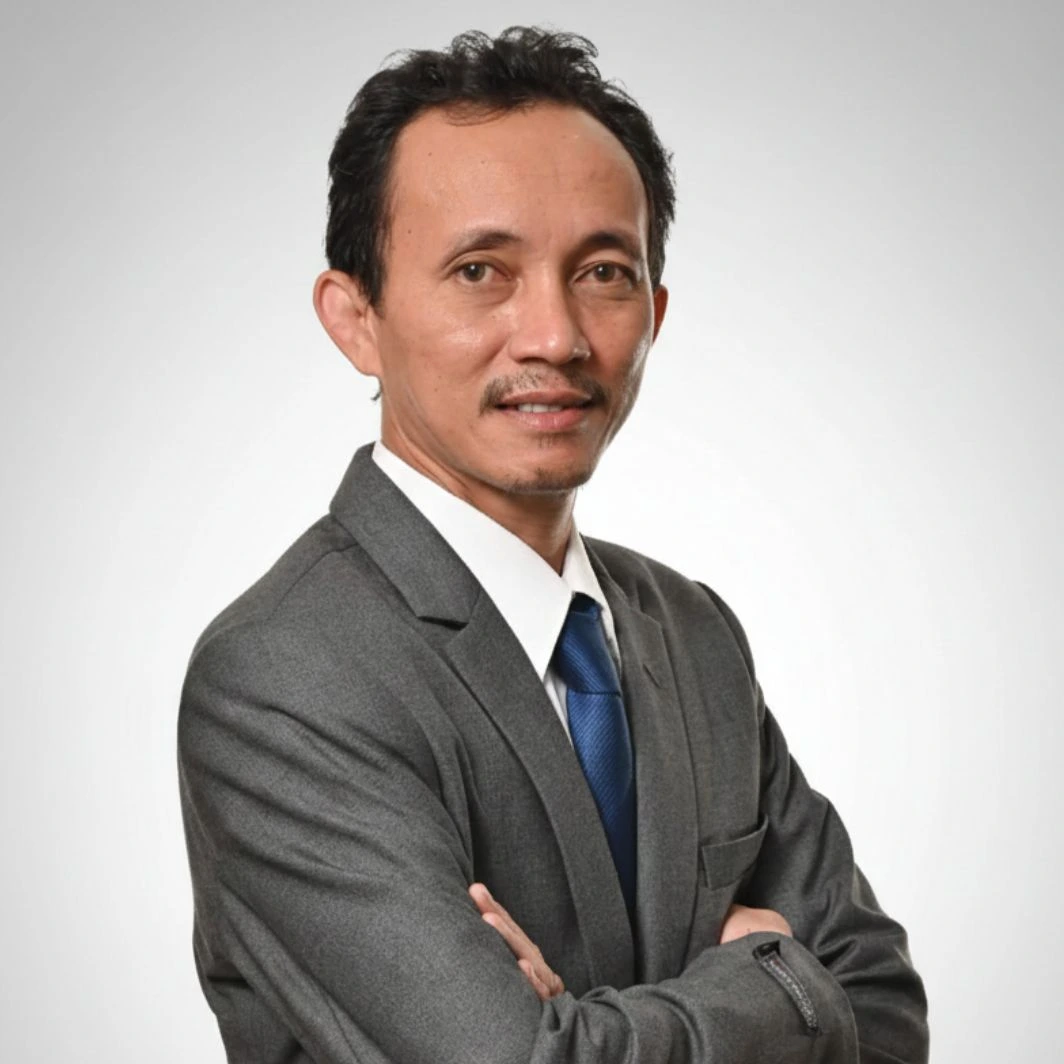
达里斯·萨拉姆
Daris Salam 是 Business Hub Asia 的首席执行官,在财务和运营领域拥有十余年的专业经验。他是一位注册会计师,并持有税务专业资格证书,专长于市场准入和战略增长。他致力于通过强大的咨询服务和高水平的绩效跟踪,赋能国际投资者。.
随时掌握市场动态
常见问题
Can an Indonesian company own 100% of a Singapore subsidiary?
Yes. Singapore allows 100% foreign ownership of a private limited company. The Indonesian parent (or Indonesian individuals) can hold all shares; only one locally resident director is required.
Does a Singapore branch of an Indonesian company pay lower tax than a subsidiary?
No. Both pay the flat 17% corporate tax rate on Singapore-sourced income. However, a branch is generally a non-resident and cannot claim startup tax exemptions or benefits under the Indonesia–Singapore Double Taxation Agreement, so a subsidiary is usually more tax-efficient.
How long does it take to set up each structure?
A subsidiary can typically be incorporated with ACRA in 2–5 days once documents are ready. A branch registration takes a similar time. A representative office application through Enterprise Singapore usually takes about a week.
Can a representative office be converted into a subsidiary later?
There is no direct conversion: you incorporate a new subsidiary (or register a branch) and close the RO. Many companies do this before the RO’s three-year limit expires.
Do I need to relocate staff from Indonesia to Singapore?
Not necessarily. A subsidiary needs one locally resident director, which can be fulfilled through a nominee director service. If you second Indonesian staff, they will need an Employment Pass or other valid work pass.
联系我们的团队
请让我们知道我们如何协助您的公司成立或扩张。
自信地进入东南亚市场
亚洲商业中心随时准备帮助您了解印度尼西亚、越南和菲律宾的法规,涵盖从营业执照、产品注册到劳动力管理等各个方面。我们采用高效、准确且以业务为中心的方法。
免责声明
本网站提供的内容由 PT. Bisnis Hub Asia (“我们“, 或者 ”我们”)仅供一般参考之用。尽管我们已尽一切努力确保所提供信息的准确性和及时性,但我们不对本网站所述任何内容、产品或服务的完整性、准确性、可靠性、适用性或可用性作出任何明示或暗示的陈述或保证。任何依赖此类信息的风险均由用户自行承担。
我们是一家 私人、独立实体 并且 不隶属于, 授权, 或者 代表 印度尼西亚共和国政府、其各部委、机构或任何官方指定的代表。本网站不 不是 提供、提供或推广任何官方政府文件或服务,包括但不限于:
企业识别号(Nomor Induk Berusaha – NIB);
退税或返还;
居留许可或电子旅行授权;
护照或其他与移民相关的文件。
对此类服务的任何引用仅供一般参考,不应被视为官方服务的提供或便利。
我们致力于确保按照以下规定保护您的个人数据 2022年第27号《个人数据保护法》任何通过本网站收集的个人信息,都将按照我们[隐私声明]中明确规定的用途进行处理。在任何情况下,我们都不会出售或滥用个人信息。
访问并使用本网站,即表示您确认并同意本免责声明中所列的条款。您进一步同意以负责任的方式使用本网站及其所提供的信息,并遵守适用的法律法规。
如需了解有关本免责声明的更多信息或有任何疑问,请通过我们的联系页面提供的渠道与我们联系。

你可能还喜欢
随时了解我们关于在东南亚开展业务的最新见解、指南和文章。
公司注册
How to Open a Corporate Bank Account Indonesia: Timeline & Requirements

Tjhia Edy Tarlesno, SH, LLM. • 8 月 12, 2026
公司注册
Can a Foreign Director Run Multiple Companies in Indonesia?

Tjhia Edy Tarlesno, SH, LLM. • 8 月 11, 2026
公司注册
Director vs Commissioner in a Foreign-Owned Company in Indonesia

Daris Salam • 8 月 10, 2026