







后退

How to Appoint an Importer of Record for SNI Certification in Indonesia: A Foreign Manufacturer’s Guide

4 月 28, 2026

阅读时间:7分钟

Appoint an Importer of Record for SNI Certification in Indonesia

内容

Selling products in Indonesia is a rewarding opportunity, but it comes with a non-negotiable requirement that catches many international brands off guard. 

Foreign manufacturers cannot apply for SNI certification on their own. They need a legally registered local entity to act on their behalf, and this is where appointing an Importer of Record for SNI Certification becomes the pivotal first step in every successful Indonesia market entry strategy.

This guide walks through the entire process, including the regulatory framework, the role of an official representative, common pitfalls to avoid, and how to find a reliable partner to keep the process smooth from start to finish.

What Is SNI Certification and Why Does Indonesia Require It?

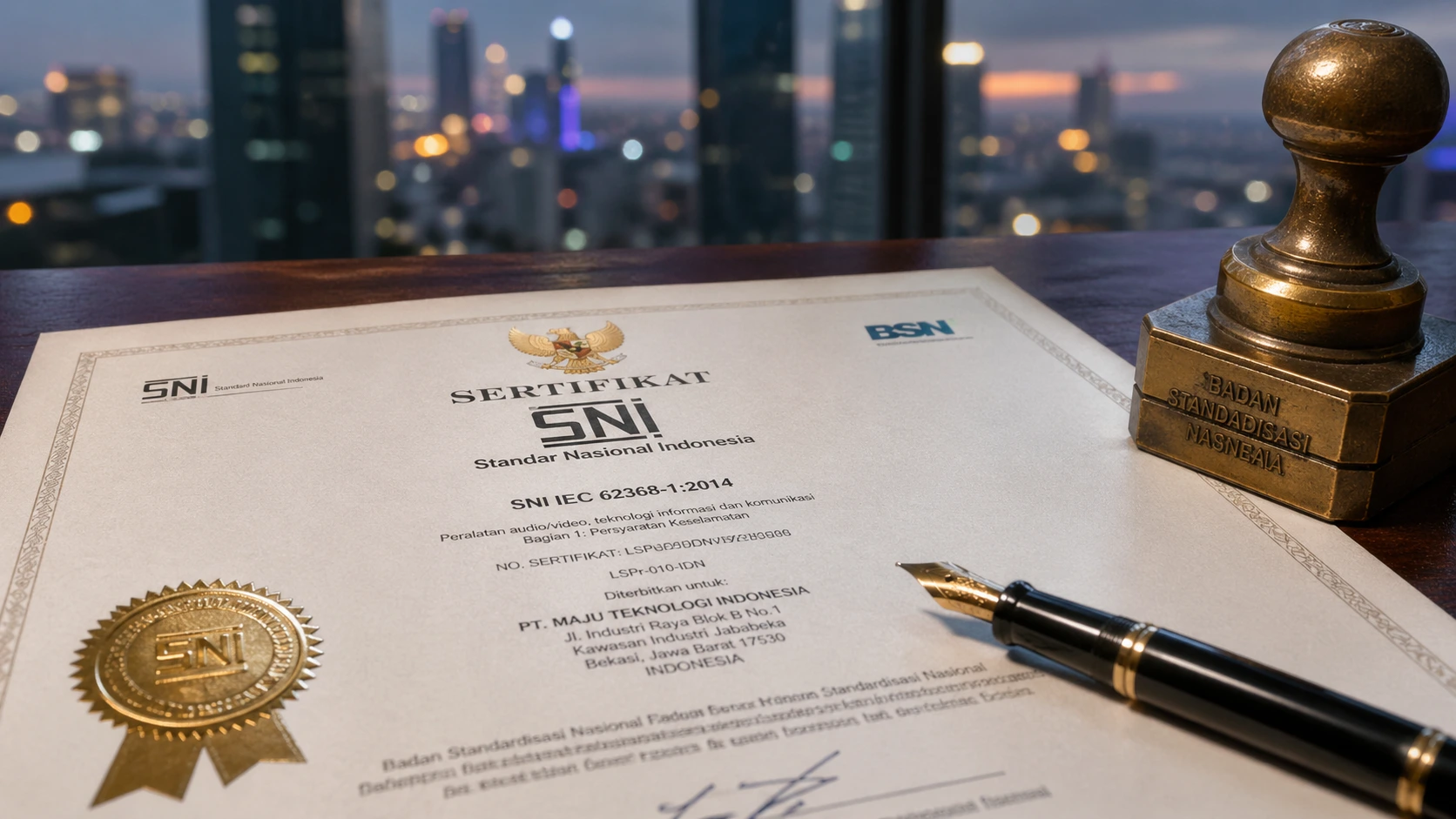
SNI stands for Standar Nasional Indonesia, which translates to the Indonesian National Standard. It is the official standardization system administered by BSN (Badan Standardisasi Nasional), Indonesia’s National Standardization Body. 

SNI certification exists to protect Indonesian consumers by ensuring that products entering the market meet defined safety, quality, and performance thresholds. 

For foreign manufacturers, the certification is also a signal of credibility in a competitive marketplace.

There are two categories worth understanding:

Mandatory SNI: Certain product categories are legally required to carry the SNI mark before they can be imported, distributed, or sold in Indonesia. These include electronics, electrical appliances, construction materials, food products, children’s toys, and dozens of other regulated categories.

Voluntary SNI: Other product types can voluntarily pursue SNI certification as a market differentiation strategy, though many businesses choose it to build consumer trust faster.

The relevant regulation governing mandatory SNI products is Government Regulation No. 34 of 2018 on the Indonesian National Standard System, along with sector-specific ministerial decrees issued by the Ministry of Industry (Kemenperin) and the Ministry of Trade (Kemendag). 

Product-specific SNI requirements are enforced through these ministerial regulations, and non-compliant products are subject to import ban or recall. 

有关的: Introduction: Why SNI Certification Is the Key to Indonesia’s Consumer Market

Why Foreign Manufacturers Cannot Apply for SNI Alone

Here is where many foreign manufacturers encounter their first roadblock. Unlike some certification systems where the overseas brand can apply directly, the SNI certification framework requires that a locally registered Indonesian entity serves as the applicant and holds the certificate. 

This is not just a bureaucratic formality; it is a legal requirement under Indonesian law.

This means a German electronics company, an American toy brand, or a Chinese home appliance manufacturer must work through a local partner. 

This local entity is called the Importer of Record (IOR) or in the context of SNI, the pemegang sertifikat (certificate holder). Without one, the certification process simply cannot begin.

This regulatory design ensures that there is always a locally accountable party responsible for the product’s compliance in the Indonesian market.

What Does an Importer of Record Actually Do?

The Importer of Record for SNI Certification takes on a set of structured responsibilities on behalf of the foreign manufacturer. Understanding these responsibilities helps brands choose the right partner and set clear expectations from the start.

Key functions of an IOR in the SNI process include:

  • Acting as the official applicant for SNI certification with the relevant LSPro (Lembaga Sertifikasi Produk), or product certification body, accredited by KAN (Komite Akreditasi Nasional).
  • Coordinating product sample submission and testing at BSN-accredited laboratories.
  • Liaising with the certification body throughout the audit and assessment process.
  • Maintaining the SNI certificate and ensuring renewal compliance.
  • Affixing the SNI mark on products in accordance with the approved marking requirements.
  • Taking legal accountability for the product’s ongoing compliance in the Indonesian market.

For foreign manufacturers who want to explore this service in depth, the team at BusinessHubAsia outlines the full scope.

Step-by-Step: How to Appoint an Official IOR for SNI Certification

The process of appointing a qualified Importer of Record for SNI Certification in Indonesia follows a defined sequence. Here is what to expect:

Step 1: Identify Whether the Product Requires Mandatory SNI

Before anything else, the manufacturer needs to confirm whether their product falls under mandatory or voluntary SNI coverage. This can be checked through the relevant ministerial regulation or by consulting with a local compliance expert.

Step 2: Select a Qualified IOR Partner

Not all importers qualify as an IOR for SNI purposes. The IOR must be a legally registered Indonesian company, typically with experience in product certification and a clean business track record. This partner will carry legal responsibility, so due diligence is essential.

Step 3: Execute a Letter of Appointment or Agreement

The foreign manufacturer formally appoints the IOR through a notarized or legally recognized agreement. This document authorizes the IOR to act on behalf of the brand in all SNI-related matters.

Step 4: Product Testing and Factory Audit

Depending on the product type and SNI standard, the certification body may require product sample testing at an accredited laboratory, a factory audit at the manufacturer’s overseas facility, or both. This is often the most time-intensive part of the process.

Step 5: Certificate Issuance and SNI Marking

Once testing and audits are passed, the LSPro issues the SNI certificate under the IOR’s name. The product can then be legally marked with the SNI logo as specified in the certification approval.

Step 6: Ongoing Compliance and Surveillance

SNI certification is not a one-time event. Certificate holders must comply with periodic surveillance audits and renewal requirements. The IOR is responsible for maintaining this compliance throughout the certificate’s validity period.

Indonesian Regulations Every Foreign Manufacturer Should Know

Navigating the SNI process without understanding the regulatory landscape is a recipe for delay. Below are the key regulations that shape the framework:

Government Regulation No. 34 of 2018 establishes the legal foundation for the SNI system, covering standardization, conformity assessment, and the roles of BSN and KAN.

Peraturan Menteri Perindustrian (Permenperin) or Ministry of Industry Regulations define which industrial products carry mandatory SNI requirements and the specific standards they must comply with.

Peraturan Menteri Perdagangan (Permendag) or Ministry of Trade Regulations govern import requirements and the registration of products before they enter commerce.

KAN Accreditation Rules define which certification bodies are authorized to conduct SNI conformity assessments and under what conditions.

Understanding how these regulations interact is part of what an experienced Importer of Record for SNI Certification brings to the table. A competent IOR does not just handle paperwork; they navigate the regulatory ecosystem on the manufacturer’s behalf.

Why Getting SNI Certification Right Matters

Beyond legal compliance, getting SNI certification right the first time has real commercial value. Products that fail to carry the SNI mark when required are subject to customs detention, confiscation, or being barred from retail shelves. 

For brands already investing in marketing and distribution in Indonesia, a compliance failure at this stage can be costly and reputation-damaging.

On the other hand, a properly SNI-certified product signals quality and trustworthiness to Indonesian consumers. In a market where product safety concerns run high, the SNI mark is a recognized badge of credibility. 

International organizations working in the trade and standards space, such as UNIDO‘s Global Quality and Standards Programme, consistently emphasize that compliance with national product standards is one of the most effective tools for market penetration in emerging economies.

Common Mistakes Foreign Manufacturers Make

A few patterns consistently create problems for foreign brands attempting to enter Indonesia:

Underestimating the IOR’s role. Some manufacturers treat the IOR as a passive paperwork handler. In reality, the IOR holds legal accountability. Choosing a credible, experienced partner matters enormously.

Skipping the mandatory SNI check. Assuming a product is exempt from mandatory SNI is a risky shortcut. A proper pre-assessment can prevent costly surprises at customs.

Choosing an IOR without certification experience. Not every import company understands the SNI process in detail. 

Ignoring post-certification obligations. Surveillance audits and renewals are easy to overlook after the initial certificate is issued. Letting these lapse can result in certificate suspension.

The Bottom Line

Indonesia’s market is one of Southeast Asia’s most dynamic and fastest-growing consumer economies. But access to that market, for foreign-made products, runs through a clear compliance gate: SNI certification. And SNI certification, for any overseas manufacturer, runs through a qualified Importer of Record for SNI Certification.

Appointing the right IOR is not just a regulatory checkbox. It is a strategic decision that shapes how smoothly, quickly, and confidently a foreign brand can reach Indonesian consumers.

The process is navigable with the right guidance, and the opportunity on the other side is well worth the investment.

Ready to take the next step? Reach out to our team today and get expert support from Day 1. Whether starting from zero or picking up a stalled certification process, our team is ready to help move things forward, on time and fully compliant.

法赫里·拉曼达·普特拉是一位资深的法律顾问,在印尼监管事务领域拥有超过10年的经验。他擅长指导跨国公司完成复杂的许可和合规流程,以确保其运营顺利成功。.

随时掌握市场动态

订阅电子报表格

常见问题

What is an Importer of Record for SNI Certification, and why is it required?

An Importer of Record for SNI Certification is a legally registered Indonesian entity that acts as the official applicant and certificate holder for SNI certification on behalf of a foreign manufacturer. It is required because Indonesian regulations do not permit overseas companies to directly apply for or hold SNI certificates. The IOR provides the legally accountable local presence that the certification system demands.


Can any Indonesian company serve as an Importer of Record for SNI purposes?

Not every Indonesian company is suitable. The IOR must be a legally registered business entity in Indonesia and should have verifiable experience working with accredited product certification bodies (LSPros) and KAN-accredited laboratories. Experience in the relevant product category is also highly recommended to avoid delays during testing and audits.


How long does the SNI certification process take for foreign manufacturers?

The timeline varies depending on the product type, the complexity of the applicable SNI standard, and whether a factory audit is required. On average, the process can take anywhere from three to six months. Products requiring overseas factory inspections or specialized laboratory testing may take longer. Working with an experienced IOR partner who knows the process well can significantly reduce unnecessary delays.


What happens if a foreign manufacturer sells products in Indonesia without SNI certification?

Products that require mandatory SNI certification but lack it are subject to serious consequences. These include customs detention at the port of entry, import ban, product confiscation, and financial penalties. In some cases, the responsible local party may face legal action. This underscores why proper compliance through a qualified IOR is not optional for regulated product categories.


Does the SNI certificate need to be renewed?

Yes. SNI certificates are subject to periodic surveillance audits and renewal requirements. The specific renewal schedule depends on the product type and the terms set by the issuing LSPro, but most certificates require annual surveillance activities and full renewal every three years. The Importer of Record is responsible for managing these ongoing compliance obligations.


Can one Importer of Record handle multiple product categories from the same foreign manufacturer?

Yes, in many cases a single IOR can manage certification for multiple products or product categories from the same foreign manufacturer. However, each product category may require a separate certification body (LSPro) if different standards apply. A full-service partner like BusinessHubAsia can coordinate across multiple product lines under a unified compliance framework.


How does BusinessHubAsia support foreign manufacturers through the SNI certification process?

BusinessHubAsia acts as both the Importer of Record and the compliance coordinator for foreign manufacturers entering the Indonesian market. Their services cover initial product classification and SNI applicability checks, LSPro selection, laboratory testing coordination, factory audit support, certificate application, SNI mark guidance, and post-certification surveillance management. The goal is to make the process straightforward and reliable so foreign brands can focus on their market strategy rather than regulatory complexity. More information is available at www.businesshubasia.com.


联系我们的团队

请让我们知道我们如何协助您的公司成立或扩张。

联系表格
请使用公司邮箱提交,以便更快得到回复和优先处理。.
联系表格(中文)
请使用公司邮箱提交,以便更快得到回复和优先处理。.

自信地进入东南亚市场

亚洲商业中心随时准备帮助您了解印度尼西亚、越南和菲律宾的法规,涵盖从营业执照、产品注册到劳动力管理等各个方面。我们采用高效、准确且以业务为中心的方法。

免责声明

本网站提供的内容由 PT. Bisnis Hub Asia (我们“, 或者 ”我们”)仅供一般参考之用。尽管我们已尽一切努力确保所提供信息的准确性和及时性,但我们不对本网站所述任何内容、产品或服务的完整性、准确性、可靠性、适用性或可用性作出任何明示或暗示的陈述或保证。任何依赖此类信息的风险均由用户自行承担。

我们是一家 私人、独立实体 并且 不隶属于, 授权, 或者 代表 印度尼西亚共和国政府、其各部委、机构或任何官方指定的代表。本网站不 不是 提供、提供或推广任何官方政府文件或服务,包括但不限于:

  • 企业识别号(Nomor Induk Berusaha – NIB);

  • 退税或返还;

  • 居留许可或电子旅行授权;

  • 护照或其他与移民相关的文件。

对此类服务的任何引用仅供一般参考,不应被视为官方服务的提供或便利。

我们致力于确保按照以下规定保护您的个人数据 2022年第27号《个人数据保护法》任何通过本网站收集的个人信息,都将按照我们[隐私声明]中明确规定的用途进行处理。在任何情况下,我们都不会出售或滥用个人信息。

访问并使用本网站,即表示您确认并同意本免责声明中所列的条款。您进一步同意以负责任的方式使用本网站及其所提供的信息,并遵守适用的法律法规。

如需了解有关本免责声明的更多信息或有任何疑问,请通过我们的联系页面提供的渠道与我们联系。