






Green Special Economic Zones in Indonesia: The Sustainable Industrial Frontier of 2026
4月 22, 2026
•
6分で読めます
コンテンツ
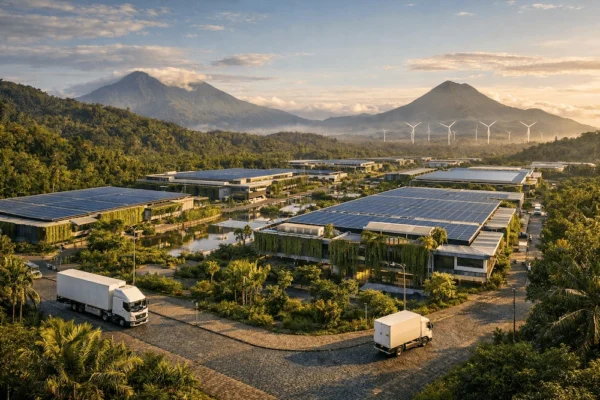
The image of industrial progress has undergone a radical transformation. Only a decade ago, industrial zones were synonymous with smoke-filled horizons and heavy environmental footprints. However, as we move through 2026, the global manufacturing paradigm has shifted toward sustainability. For modern Multi-National Corporations (MNCs), particularly those in the high-precision medical device and healthcare sectors, Environmental, Social, and Governance (ESG) compliance is no longer a secondary consideration.
It has become a mandatory operational standard. Indonesia has strategically anticipated this shift by reimagining its industrial clusters. By developing Green Special Economic Zones in Indonesia, the nation is positioning itself as the premier destination for sustainable investment and sophisticated manufacturing in Southeast Asia.
For foreign medical device manufacturers and healthcare distributors, this evolution represents more than just environmental stewardship; it represents a reduction in long-term risk. Entering a market like Indonesia requires a robust understanding of how these green zones facilitate a smoother business set up and ensure that every business license acquired aligns with future-proof global standards.
As the world demands greener supply chains, Indonesia’s specialized zones offer a turnkey solution for companies looking to expand their footprint while maintaining impeccable ESG credentials.
The Strategic Roadmap: Transitioning Toward Green Special Economic Zones in Indonesia
Indonesia’s journey toward sustainable industrialization is not merely a collection of policy promises. It is a structured transition backed by significant international partnerships. A pivotal moment in this trajectory was the formal collaboration between the National Council for SEZs and the Global Green Growth Institute (GGGI).
Since the expansion of their Memorandum of Understanding in 2024, the focus has shifted toward making these zones “future-proof.”
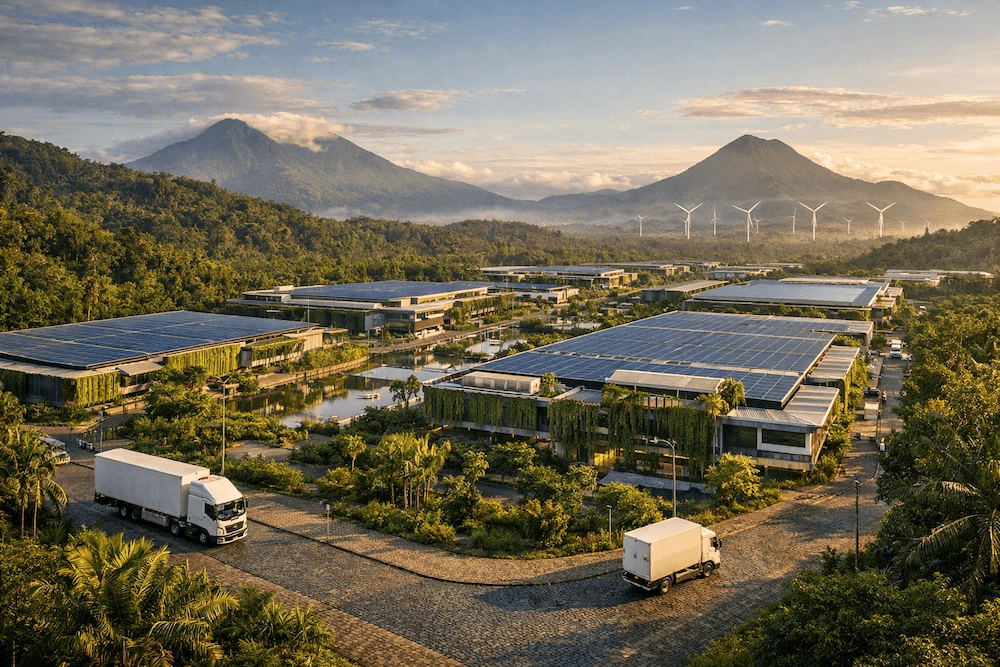
When an investor initiates a business set up in an Indonesian SEZ today, they are not just renting space; they are integrating into an ecosystem designed to meet the carbon-neutral standards of 2045. A Green SEZ is characterized by several core pillars that are particularly attractive to the healthcare industry.
These include renewable energy grids that utilize solar, geothermal, and biomass power instead of traditional coal. Furthermore, these zones implement circular economy principles where industrial waste, such as excess heat or chemical byproducts, is repurposed as raw materials for neighboring facilities. This synergy reduces costs and enhances the sustainability profile of the entire zone.
Why Healthcare and Medical Device Firms Prefer Green Special Economic Zones in Indonesia
For medical device manufacturers, the environment in which production occurs is critical. The precision required for medical instrumentation and the sterile conditions needed for pharmaceutical production demand stable, high-quality infrastructure.
Green Special Economic Zones in Indonesia provide this through green building standards. Infrastructure built with sustainable materials often reduces energy consumption by up to 30 percent, providing a more stable and cost-effective power supply for sensitive machinery.
Furthermore, healthcare companies are under increasing pressure from international regulators to prove that their products are manufactured ethically. By operating within a zone that prioritizes ESG compliance Indonesia, manufacturers can leverage the zone’s existing certifications.
This simplifies the process of obtaining an international business license for export, as the “green” credentials of the manufacturing site are already verified by the Indonesian government and its international partners.
Case Study: Sei Mangkei and Sustainable Supply Chain Excellence
If one wishes to see the practical application of a Green SEZ, the Sei Mangkei SEZ in North Sumatra serves as the primary example. It has become the gold standard for sustainable supply chains in the region. Originally known as a hub for the palm oil industry, it has evolved into a sophisticated bio-refinery center.
Investors in Sei Mangkei benefit from a pre-certified sustainable ecosystem. For medical firms that utilize oleochemicals or bio-based polymers in their packaging and products, this zone offers a direct link to raw materials that are produced under strict environmental oversight.
This makes it significantly easier to export products to the European Union and North America, where proof of sustainability is mandatory. Beyond environmental factors, the zone integrates Fairtrade schemes for local fishery and agricultural products, ensuring that the “Social” component of ESG is addressed at the source.
Morowali and Nusantara: New Frontiers for Green Special Economic Zones in Indonesia
The Indonesian government is currently proposing and developing new zones that are “Green from Day One.” Two prominent examples are Morowali and the new capital, Nusantara (IKN).
- Morowali: The Green Metals Hub. While historically known for nickel mining, the 2026 focus has shifted toward clean energy development. To maintain a competitive edge in the Electric Vehicle (EV) battery market and the production of medical-grade stainless steel, Morowali is transitioning its smelting processes to use cleaner energy sources. This ensures that the healthcare equipment of the future is not manufactured using “dirty” energy.
- Nusantara SEZ (IKN): The Energy Supply Hub. The new capital is designed as a “Forest City,” and the accompanying Nusantara SEZ serves as a high-tech laboratory for renewable energy. For healthcare companies interested in Research and Development (R&D), this zone offers an unparalleled environment for testing new green technologies and sustainable medical solutions within the ASEAN region.
Navigating Regulatory Frameworks: Licensing and Compliance
確保する business license in Indonesia involves navigating a specific set of regulations designed to encourage local growth and environmental responsibility. In Green Special Economic Zones in Indonesia, these regulations are often streamlined to attract high-quality foreign investment.
One critical aspect is the TKDN requirements (Local Content Requirements). Indonesia encourages the use of local materials and labor. In green zones, using locally produced solar panels or sustainable building materials can help companies meet these quotas more efficiently.
Additionally, Indonesia is home to one of the world’s largest carbon credit potentials. Manufacturing in a Green SEZ may eventually allow firms to offset their remaining emissions through local carbon exchange programs, a major benefit for companies aiming for “Net Zero” targets.
その business set up process in these zones is typically managed through a “One-Stop Service” (OSS) system. This centralized approach reduces bureaucratic hurdles, allowing healthcare distributors and manufacturers to obtain their operational permits faster than they would in non-specialized zones.
The Business Case: Why “Going Green” is Profitable in 2026
A common question among institutional investors is whether the transition to green energy increases the cost of entry. While the initial setup costs for sustainable infrastructure can be slightly higher, the medium-term Return on Investment (ROI) is far superior for several reasons:
- Lower Operational Costs: Smart grids and renewable energy sources significantly reduce long-term electricity bills, which are often the highest overhead for manufacturing plants.
- Enhanced Market Access: Sustainable products sell at a premium and face fewer trade barriers in Western markets, ensuring a smoother export path for medical devices.
- Access to Greener Capital: Many global banks and “Green Bonds” offer lower interest rates to companies operating within certified sustainable zones, reducing the cost of debt.
By choosing to operate within Green Special Economic Zones in Indonesia, companies are effectively “future-proofing” their assets against upcoming carbon taxes and stricter environmental regulations.
Conclusion: Securing Your Place in Indonesia’s Sustainable Future
The shift toward green manufacturing is accelerating, and the window for “first-mover” advantages is narrowing. By 2030, Indonesia aims for a significant portion of its SEZs to be powered entirely by renewable energy, with a goal of a fully “Net Zero” industrial ecosystem by 2045.
For the foreign investor, entering Green Special Economic Zones in Indonesia now is a strategic play. You are not simply purchasing land; you are securing a position within a sustainable global supply chain that will soon be the only viable way to conduct international business.
The Indonesian government remains committed to supporting foreign medical device manufacturers and healthcare companies through favorable tax incentives and streamlined licensing. Don’t get left behind with “stranded assets” in non-compliant zones. The future of industrial success in Southeast Asia is undeniably green.
私たちのチームに連絡してください
弊社が貴社の会社設立や拡大にどのように貢献できるかお知らせください。
自信を持って東南アジア市場への参入を始めましょう
Business Hub Asiaは、事業ライセンスや製品登録から従業員管理まで、インドネシア、ベトナム、フィリピンの規制遵守をお手伝いします。効率的で正確、そしてビジネス重視のアプローチでサポートいたします。
免責事項
このウェブサイトで提供されるコンテンツは、 PT. ビジネスハブアジア (“「“私たちは"、 または "私たち(以下「本サイト」といいます)は、一般的な情報提供のみを目的としています。掲載情報の正確性と最新性を確保するため、当社はあらゆる努力を払っておりますが、本サイトに掲載されているコンテンツ、製品、またはサービスの完全性、正確性、信頼性、適合性、または可用性について、明示的または黙示的を問わず、いかなる表明または保証も行いません。当該情報への依拠は、ユーザーご自身の責任において行っていただきますようお願いいたします。
私たちは 民間の独立団体 そして 提携関係にない, 承認者、 または 代理として行動する インドネシア共和国政府、その省庁、機関、または公式に任命された代表者。本ウェブサイトは ない 以下を含むがこれに限定されない、政府の公式文書またはサービスを提供、提供、または宣伝すること:
企業識別番号 (Nomor Induk Berusaha – NIB);
税金の還付または払い戻し。
滞在許可証または電子渡航認証。
パスポートまたはその他の入国関連書類。
かかるサービスへの言及は、一般的な情報提供のみを目的としており、公式サービスの提供または促進として解釈されるべきではありません。
当社は、お客様の個人情報を以下のとおり保護することに尽力しております。 2022年個人情報保護法第27号当ウェブサイトを通じて収集された個人情報は、[プライバシーステートメント]に明記されている目的のために処理されます。いかなる状況においても、個人データを販売または悪用することはありません。
本ウェブサイトにアクセスし、本ウェブサイトを利用することにより、お客様は本免責事項に定められた条件を承認し、同意するものとします。また、お客様は本ウェブサイトおよび提供される情報を、適用される法令を遵守し、責任を持って利用することに同意するものとします。
この免責事項に関する詳しい情報やご質問については、お問い合わせページに記載されているチャネルを通じて当社までご連絡ください。
あなたも気に入るかもしれない
東南アジアでのビジネスに関する最新の洞察、ガイド、記事で最新情報を入手してください。
事業許可証
Ensuring Compliance: How to Transition Your Business to KBLI 2025

Tjhia Edy Tarlesno, SH, LLM. • 6月 24, 2026
事業許可証
Indonesia Business License After NIB: What You Still Need to Operate Legally

Fahri Ramanda Putra • 5月 25, 2026
事業許可証
How to Start a Fintech Company in Indonesia: The Complete Guide for Foreign Investors
Fahri Ramanda Putra • 5月 8, 2026