









Indonesia Tax Overpayment Refund: The 2026 Rules Every Foreign Business Must Know
April 15, 2026
•
Waktu baca 9 menit
Isi
Imagine filing a company’s annual tax return in Indonesia, seeing a clear surplus balance, and planning to recover that money, only to receive an official notice stating that the overpayment will not be refunded. This is now the reality for many taxpayers under the latest issuance from Indonesia’s Directorate General of Taxation (DGT). Understanding the rules around the Indonesia tax overpayment refund is no longer optional for foreign businesses operating in the country. It has become a compliance necessity.
Menurut Detik Finance, the Directorate General of Taxation’s new regulation (No. PER-03/PJ/2026), effective as of March 16, 2026, clarifies the criteria for tax surpluses. The ruling defines exactly when a surplus in an Annual Tax Return (SPT) qualifies as a genuine overpayment versus when it does not.
For foreign investors, exporters, and companies doing business in Indonesia, knowing the details of this regulation is essential to managing tax exposure and avoiding unwelcome surprises.
What Is PER-03/PJ/2026 and Why It Matters
PER-03/PJ/2026, officially titled Peraturan Direktur Jenderal Pajak Nomor PER-03/PJ/2026 tentang Tata Cara Penyampaian, Penerimaan dan Pengolahan Surat Pemberitahuan (Regulation of the Director General of Taxation on Procedures for Communicating, Receiving, and Processing the Annual Tax Notification Letter), governs the full process of how SPT submissions are communicated, received, and processed by the tax authority.
What makes this regulation particularly significant is Article 22, which introduces clear conditions under which an overpayment shown in the SPT is deemed to not represent a genuine excess tax payment. In other words, a positive balance in the tax return does not automatically trigger a refund or restitution claim to Indonesia’s tax authority.
For foreign companies, including those operating under a PT PMA (Penanaman Modal Asing, or Foreign Direct Investment Company), a Representative Office (KPPA), or any other legally registered entity in Indonesia, this development carries real implications for cash flow planning and tax strategy.
What the New Rules Say About Indonesia Tax Overpayment Refund
Under Article 22 of PER-03/PJ/2026, the DGT identifies several specific situations where the Indonesia tax overpayment refund mechanism does not apply. These situations are not edge cases. They reflect common occurrences in day-to-day SPT filing that businesses must actively avoid.
Overpayment Caused by Rounding Differences in the DGT’s System
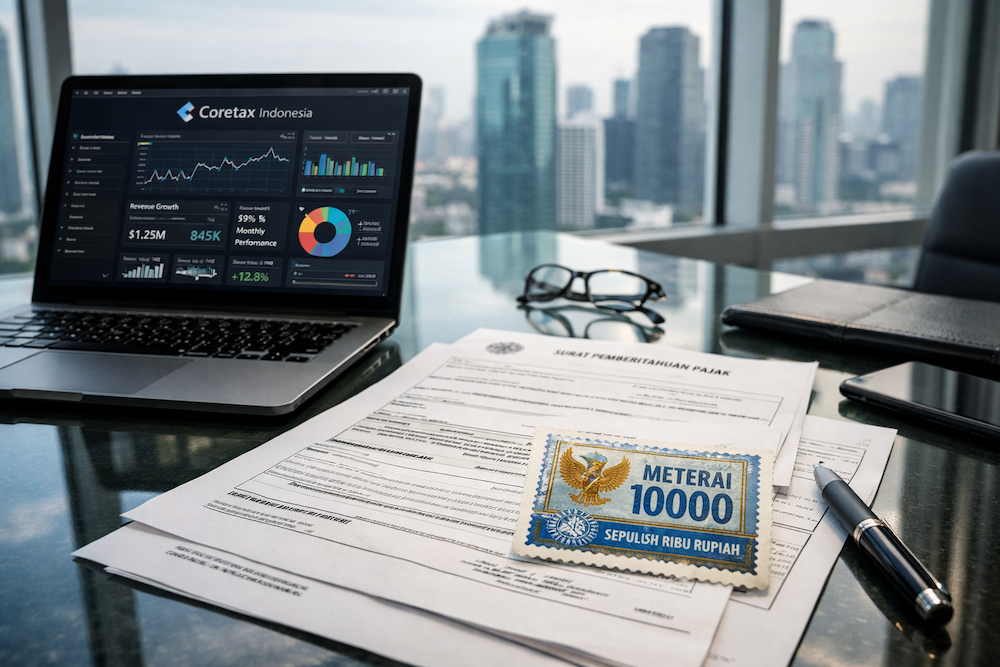
When the surplus amount in an SPT arises purely from rounding differences within the DGT’s digital tax administration platform, known as the Coretax system, the overpayment is treated as a technical discrepancy rather than a genuine excess payment. Such differences are administrative in nature and are explicitly excluded from the restitution process.
Government-Borne Income Tax (PPh DTP)
If the apparent surplus is linked to income tax that was already covered by the government through an incentive known as Pajak Penghasilan Ditanggung Pemerintah (PPh DTP), the taxpayer cannot claim it as a refund. Because the taxpayer did not directly pay this portion of the tax from its own funds, there is no valid basis for a restitution claim.
Errors in SPT Preparation
The regulation explicitly flags specific errors in tax return preparation that create a false impression of overpayment. These include:
- Incorrect reporting of PPh Article 21 (employee income tax) amounts relative to the actual tax withheld from salary
- Claiming a tax credit without declaring the corresponding income that generated the credit
- Mixing tax credits from income subject to final tax (pajak final) into the calculation for non-final income tax obligations
- Including a spouse’s tax credits under a filing scheme where this is not permissible
Provisions Specific to Government Employees
For employees of government institutions, such as civil servants (PNS), members of the Indonesian Military (TNI), and the National Police (Polri), where all income comes from the state budget (APBN or APBD), an apparent overpayment that results only from a calculation difference with the official withholding certificate (form BPA2) is not eligible for the Indonesia tax overpayment refund process.
What Happens When the DGT Determines the Overpayment Is Non-Refundable
When the Directorate General of Taxation concludes that a stated overpayment in an SPT does not represent a genuine excess tax payment, the DGT is required to issue a formal notification letter to the taxpayer. This is explicitly stated under Article 22 paragraph (2) of PER-03/PJ/2026, where the Director General of Taxation issues the notification to communicate the determination directly.
For foreign businesses, receiving such a letter without prior context or a clear understanding of the regulatory basis can be disorienting. It may also affect financial planning, especially for companies that had factored potential refunds into their annual cash flow projections. This is one of the clearest reasons why proactive tax compliance management, supported by professionals familiar with both the DGT regulations and the Coretax system, is a critical asset for any foreign business in Indonesia.
Why This Regulation Is Critical for Foreign Investors and Exporters
Foreign companies operating in Indonesia often manage multiple layers of tax obligations simultaneously: corporate income tax (PPh Badan), value-added tax (PPN), withholding taxes on domestic transactions, and import or export duties depending on the nature of their business. Keeping each of these obligations accurate while remaining current with evolving DGT regulations is a significant administrative undertaking.
For exporters in particular, tax credits and prepayments can accumulate meaningfully across a fiscal year. Under previous assumptions, a surplus in the SPT could be treated with reasonable confidence as a future refund. PER-03/PJ/2026 makes clear that this assumption is no longer safe without a thorough review of how each credit and deduction was entered into the tax return.
Indonesia’s tax authority has been actively modernising its infrastructure, including the Coretax platform, which has fundamentally changed how tax data is submitted, validated, and processed. Technical accuracy in every SPT filing has become more important than ever. Foreign businesses that approach tax reporting casually or rely on outdated practices are at a higher risk of filing errors that may result in a non-refundable overpayment determination.
For a broader perspective on Indonesia’s investment climate and regulatory environment, the OECD’s investment climate resources (https://www.oecd.org/en/topics/investment-climate.html) offer relevant context for businesses evaluating their presence in the country.
Common Mistakes That Lead to Non-Refundable Overpayments
Several recurring errors in SPT preparation lead to surplus amounts that are ineligible for restitution. Many of these are now explicitly addressed in PER-03/PJ/2026. The most common include:
Incorrect tax credit entries. Claiming a tax credit without a corresponding income declaration creates an artificial surplus that does not reflect actual overpayment. The DGT’s Coretax system is designed to identify such inconsistencies.
Final versus non-final tax mixing. Classifying income incorrectly, such as reporting rental or royalty income subject to final tax within the general corporate income tax computation, distorts the overall tax liability calculation and can produce a misleading overpayment figure.
Spouse tax credit misapplication. Under certain SPT filing schemes, a spouse’s tax credits are simply not applicable. Including them regardless creates an apparent surplus that the DGT will not recognise as refundable.
Misunderstanding of PPh DTP incentives. Some businesses, particularly those that have benefited from government tax relief programmes, may not realise that government-borne tax subsidies cannot generate a refundable credit. The tax was never paid by the company, so it cannot be recovered.
Avoiding these errors requires proper bookkeeping, accurate income classification, and timely consultation with professionals who are well-versed in Indonesia’s corporate tax filing requirements.
How to Stay Compliant with Indonesia’s Tax Regulations in 2026
For foreign businesses and exporters operating in Indonesia, staying on the right side of the Indonesia tax overpayment refund rules begins with a few fundamental practices.
Review SPT preparation procedures thoroughly. Every line item in the annual tax return should be traceable to a proper income declaration and a legitimate, documented tax credit. Any discrepancy between the company’s books and the Coretax records should be reconciled before submission.
Understand the Coretax system. Given that rounding differences within the DGT’s administrative platform can now result in a non-refundable surplus, businesses need to be aware of how data is formatted and validated within the system.
Seek expert guidance on PPh income tax classification. Determining whether income falls under the final or non-final tax regime is fundamental. Misclassification affects not just refund eligibility but the entire corporate tax liability calculation.
Work with a local tax compliance partner. Businesses that engage experienced local advisors are significantly less exposed to the filing errors that trigger non-refundable determinations. A qualified partner monitors regulatory updates, including new DGT issuances like PER-03/PJ/2026, and ensures filings are always aligned with the latest rules.
The World Bank’s Indonesia Country Overview (https://www.worldbank.org/en/country/indonesia) provides useful data on the overall business environment in Indonesia, including administrative and regulatory frameworks relevant to tax compliance for foreign companies.
Setting Up a Business in Indonesia: Tax Compliance Starts at Registration
For those still in the early stages of entering the Indonesian market, building a solid tax foundation from day one is critical. Registering a company correctly, obtaining the appropriate business license in Indonesia, and establishing proper accounting and tax reporting systems from the outset will prevent the kind of costly complications that regulations like PER-03/PJ/2026 can create.
Each business entity type carries distinct tax obligations and SPT reporting requirements. A PT PMA filing its annual SPT must account for corporate income tax, VAT, and withholding taxes under precise classifications. Any errors introduced at the company setup or bookkeeping stage will compound over time and create a greater risk of non-compliant filings.
Business Hub Asia supports foreign investors through every stage of this process: from company registration and business license in Indonesia applications to end-to-end tax reporting services in Indonesia. The team ensures that SPT submissions are accurate, fully documented, and aligned with the most current DGT regulatory requirements, including PER-03/PJ/2026.
For businesses that are also managing import and export operations, Business Hub Asia provides support for import and export licensing, helping companies secure the correct permits and comply with all associated tax obligations under Indonesia’s OSS-RBA framework.
Navigating Indonesia’s Tax Landscape with Confidence
Indonesia remains one of Southeast Asia’s most dynamic and rewarding markets for foreign investment. Its growing middle class, strategic location, and expanding infrastructure create genuine opportunities across industries. However, the country’s regulatory landscape, particularly in the area of taxation, requires diligence, accuracy, and ongoing awareness of regulatory changes.
The introduction of PER-03/PJ/2026 is a clear signal from the Directorate General of Taxation that tax compliance in Indonesia is becoming more technically rigorous. An Indonesia tax overpayment refund is not a guaranteed outcome of a surplus SPT. It is a result of proper tax filing, correct income classification, and compliance with a set of clearly defined conditions.
Businesses that invest in quality compliance support, build transparent accounting systems, and stay informed about DGT issuances will find that operating in Indonesia becomes significantly more predictable and manageable over time.
A Final Word: Don’t Leave Your Tax Position to Chance
The gap between assuming a refund and actually receiving one has narrowed considerably under PER-03/PJ/2026. For foreign businesses and exporters who are serious about their operations in Indonesia, the time to review tax filing processes and seek professional guidance is now, before the next SPT submission.
Whether a company is entering the Indonesian market for the first time or refining its existing compliance framework, the right guidance transforms tax obligations from a liability into a managed, transparent, and fully controlled aspect of doing business.

Artikel Oleh
Daris Salam
Daris Salam adalah CEO Business Hub Asia, yang menawarkan keahlian lebih dari satu dekade di bidang keuangan dan operasional. Sebagai akuntan bersertifikat dengan latar belakang Brevet Tax, ia mengkhususkan diri dalam memasuki pasar dan pertumbuhan strategis. Ia berdedikasi untuk memberdayakan investor internasional melalui konsultasi yang kuat dan pelacakan kinerja tingkat tinggi.
Tetap update dengan wawasan pasar
Hubungi Tim Kami
Beri tahu kami bagaimana kami dapat membantu pembentukan atau perluasan perusahaan Anda.
Mulailah Memasuki Pasar Asia Tenggara dengan Percaya Diri
Business Hub Asia siap membantu Anda memahami regulasi di Indonesia, Vietnam, dan Filipina, mulai dari perizinan usaha dan pendaftaran produk hingga manajemen tenaga kerja. Dengan pendekatan yang efisien, akurat, dan berfokus pada bisnis.
Penafian
Konten yang disediakan di situs web ini diterbitkan oleh PT. Bisnis Hub Asia (“Kami", atau "kita") hanya untuk tujuan informasi umum. Meskipun segala upaya telah dilakukan untuk memastikan keakuratan dan ketepatan waktu informasi yang disajikan, kami tidak memberikan pernyataan atau jaminan, baik tersurat maupun tersirat, mengenai kelengkapan, keakuratan, keandalan, kesesuaian, atau ketersediaan konten, produk, atau layanan apa pun yang dijelaskan di situs web ini. Segala ketergantungan pada informasi tersebut sepenuhnya merupakan risiko pengguna sendiri.
Kami adalah badan swasta dan independen dan adalah tidak berafiliasi dengan, diizinkan oleh, atau bertindak atas nama Pemerintah Republik Indonesia, kementerian, lembaga, atau perwakilan resmi yang ditunjuk. Situs web ini tidak bukan menyediakan, menawarkan, atau mempromosikan dokumen atau layanan resmi pemerintah, termasuk namun tidak terbatas pada:
Nomor Induk Berusaha (NIB);
Pengembalian atau potongan pajak;
Izin Tinggal atau otorisasi perjalanan elektronik;
Paspor atau dokumen terkait imigrasi lainnya.
Referensi apa pun terhadap layanan tersebut diberikan semata-mata untuk tujuan informasi umum dan tidak boleh ditafsirkan sebagai tawaran atau fasilitasi layanan resmi.
Kami berkomitmen untuk memastikan perlindungan data pribadi Anda sesuai dengan Undang-Undang Nomor 27 Tahun 2022 tentang Perlindungan Data PribadiSegala informasi pribadi yang dikumpulkan melalui situs web ini akan diproses untuk tujuan yang dijelaskan secara jelas dalam [Pernyataan Privasi] kami. Kami tidak menjual atau menyalahgunakan data pribadi dalam keadaan apa pun.
Dengan mengakses dan menggunakan situs web ini, Anda mengakui dan menyetujui ketentuan yang tercantum dalam Pernyataan Penyangkalan ini. Anda selanjutnya setuju untuk menggunakan situs web ini dan informasi yang diberikan secara bertanggung jawab dan sesuai dengan hukum dan peraturan yang berlaku.
Untuk informasi lebih lanjut atau pertanyaan mengenai Sanggahan ini, silakan hubungi kami melalui saluran yang disediakan di halaman Kontak kami.
Anda Mungkin Juga Menyukai
Tetap terinformasi dengan wawasan, panduan, dan artikel terbaru kami tentang menjalankan bisnis di Asia Tenggara.
Lisensi Bisnis
Ensuring Compliance: How to Transition Your Business to KBLI 2025

Tjhia Edy Tarlesno, SH, LLM. • Juni 24, 2026
Lisensi Bisnis
Indonesia Business License After NIB: What You Still Need to Operate Legally

Fahri Ramanda Putra • Mei 25, 2026
Lisensi Bisnis
How to Start a Fintech Company in Indonesia: The Complete Guide for Foreign Investors
Fahri Ramanda Putra • Mei 8, 2026