








SNI Certification for Electronics and Household Appliances: A Complete 2026 Guide for Importers
April 10, 2026
•
8 minutes read
Content
Introduction: Why SNI Certification Is the Key to Indonesia’s Consumer Market
Indonesia is one of the most dynamic consumer markets in Southeast Asia, home to over 270 million people with a rapidly growing appetite for electronics and household appliances. For any foreign manufacturer or importer hoping to tap into this opportunity, SNI Certification is not simply a formality. It is the fundamental legal requirement that determines whether products can clear customs, reach store shelves, and stay on sale.
SNI stands for Standar Nasional Indonesia, or Indonesian National Standard. Managed jointly by the Ministry of Industry (Kemenperin) and the National Standardization Agency (BSN), SNI Certification ensures that consumer products meet Indonesia’s technical safety and quality benchmarks before they enter the market. As of 2026, the regulatory environment surrounding this certification has undergone its most significant overhaul in years, making it more digital, more tightly enforced, and more consequential than ever before for businesses that get it wrong.
This guide breaks down everything importers and manufacturers need to know: what has changed, which product categories are affected, how the registration process works, and what risks come with non-compliance.
What Is SNI Certification and Who Needs It?
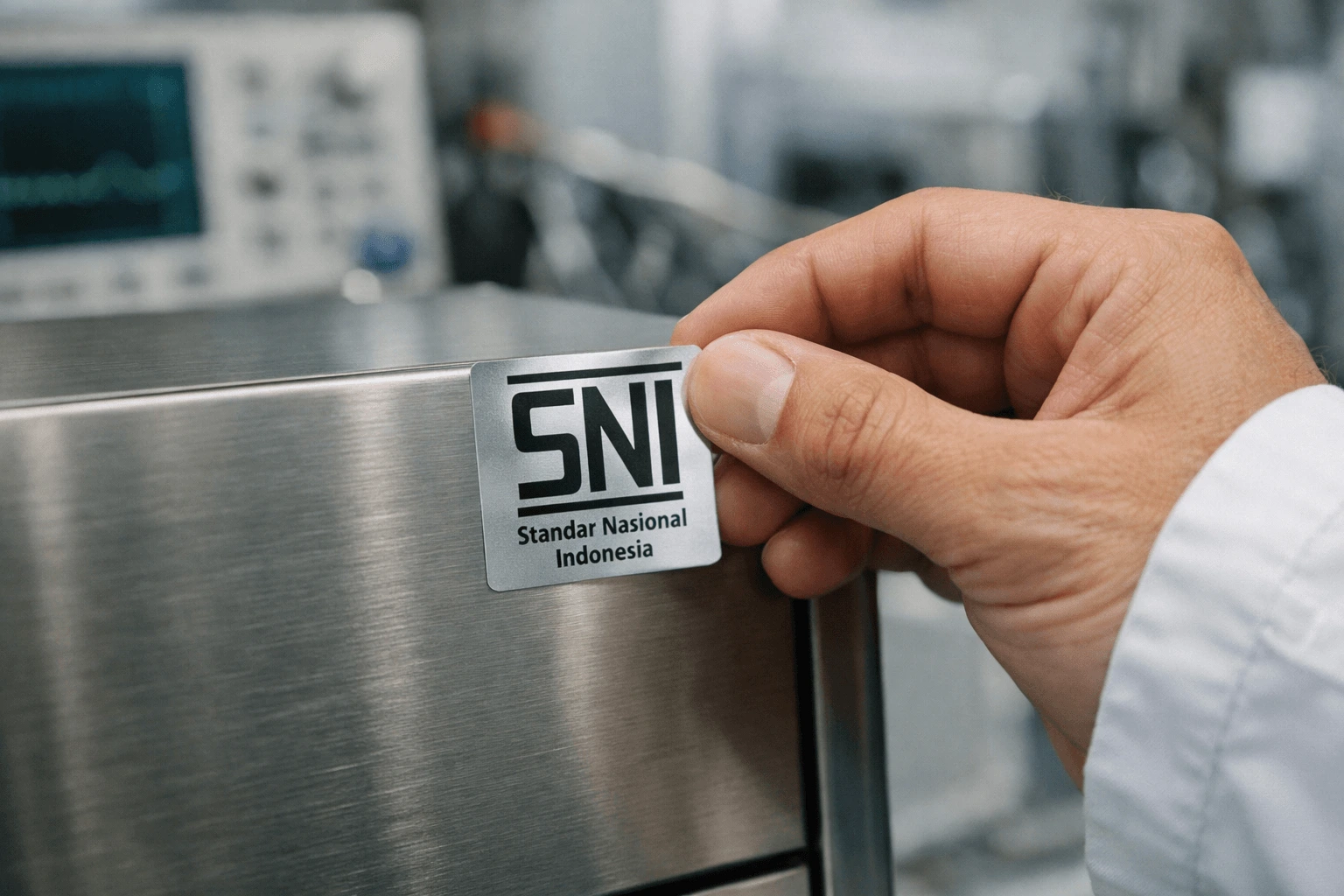
SNI Certification is a product conformity mark issued by Indonesia’s Ministry of Industry, confirming that a specific product has been tested, audited, and verified against the relevant Indonesian national standard. Once granted, it allows manufacturers and importers to display the official SNI logo on their product packaging, which is a legal requirement for all products under the mandatory SNI scheme.
The certification applies broadly across two categories of obligation. Voluntary SNI covers products where the standard exists but compliance is not legally required. Mandatory SNI, however, covers categories where the government has determined that public safety, consumer protection, or market fairness demands strict enforcement. For importers and manufacturers of electronics and household appliances, the mandatory category is by far the most relevant.
International companies entering the Indonesian market for the first time often underestimate the scope of mandatory SNI compliance. Unlike some regional standards that apply narrowly to a handful of product types, Indonesia’s mandatory SNI list covers a wide range of everyday goods, from televisions and air conditioners to power cables, rice cookers, and detergents.
The 2026 Update: SNI Certification Enters the Digital Era
The most transformative development in 2026 is the full mandatory integration of all SNI Certification applications through the SIINas platform, short for Sistem Informasi Industri Nasional (the National Industry Information System).
Under this new framework, the paper-based, fragmented registration processes that companies relied on in previous years are no longer accepted. Every element of the certification process, from company profile verification and production capacity data to lab test results and factory audit records, must now be submitted, validated, and monitored in real time through SIINas. The system creates a single digital thread connecting an importer’s NIB (Nomor Induk Berusaha, or Business Identification Number) to the Ministry of Industry’s verification database.
This shift matters for international companies because it removes much of the informal flexibility that previously existed in the process. Errors that might once have been resolved through supplementary submissions can now trigger automatic rejections or delays within the platform.
Adding to the urgency, the grace period introduced under Permenperin No. 75 of 2024, covering audio-visual and similar electronic devices, expired in June 2025. That means 2026 is the first full year of zero-tolerance enforcement for the updated technical specifications in this category. Businesses that have been operating on the assumption that enforcement would remain lenient are now operating in a significantly riskier environment.
Which Products Require Mandatory SNI Certification in 2026?
The following product categories are under active mandatory SNI enforcement in 2026. Any importer or manufacturer bringing these goods into Indonesia without valid SNI Certification faces customs detention, administrative sanctions, or forced withdrawal from retail channels.
- Audio-Visual Equipment: Televisions (LED, OLED, QLED, and Mini-LED), digital disc players, and active speakers.
- Major Household Appliances: Air conditioners, refrigerators, and washing machines (both top-load and front-load models).
- Small Household Appliances: Electric irons, rice cookers, water dispensers, blenders, mixers, and food processors.
- Lighting Products: Self-ballasted LED lamps for general lighting and luminaires designed for road lighting applications.
- Electrical Components: Fixed and flexible power cables, plugs and socket-outlets, and miniature circuit breakers (MCBs).
- Household Supplies: Detergents and household chemicals classified under the PKRT (Perbekalan Kesehatan Rumah Tangga) scheme, as well as certain plastic-based kitchenware items.
It is worth noting that this list continues to evolve. The government periodically expands the scope of mandatory SNI categories, and the most recent amendments, including Permenperin No. 4 of 2026, introduced additional updates to digital certification workflows that affect how some of these categories are processed.
Step-by-Step: The SNI Certification Registration Process
Understanding the procedural steps involved in SNI Certification helps importers plan timelines, allocate resources, and work effectively with local partners. The following reflects the current 2026 workflow.
Step 1: Product Classification and Standard Review The process begins by determining the correct HS Code for the product and identifying the applicable SNI technical standard. This is a critical foundation step. An incorrect classification can invalidate the entire process downstream.
Step 2: SIINas Account Integration Importers must secure an active, verified account on the SIINas platform. All company data, including the NIB, production capacity information, and importer registration details, must be accurate and fully updated. The Ministry cross-references this data at multiple points during the application.
Step 3: Appointing an Accredited Product Certification Body Applicants must engage an accredited product certification body (Lembaga Sertifikasi Produk) that holds current accreditation from KAN (Komite Akreditasi Nasional), the National Accreditation Committee. This independent body is responsible for verifying compliance against the applicable SNI standard.
Step 4: Factory Audit (Type 5 Certification) For products seeking long-term certification, a physical or hybrid audit of the manufacturing facility is required. The audit evaluates whether a functioning Quality Management System, typically ISO 9001:2015, is in place. Foreign manufacturers hosting auditors from Indonesia need to coordinate this stage carefully, as scheduling and documentation can be time-intensive.
Step 5: Product Sample Testing Product samples must be submitted for testing at a KAN-accredited laboratory located within Indonesia. Overseas test results from internationally recognized laboratories are generally not accepted as a substitute, which means importers must factor in shipping, in-country handling, and testing lead times.
Step 6: SPPT-SNI Certificate Issuance Once the accredited certification body has reviewed all audit and testing documentation and confirmed compliance, the Ministry of Industry formally issues the SPPT-SNI (Sertifikat Produk Penggunaan Tanda SNI). This certificate is the official authorization to use the SNI mark.
Step 7: NPB Registration and SNI Marking The final step involves obtaining the NPB (Nomor Pendaftaran Barang, or Goods Registration Number) and physically applying the certified SNI logo to all product packaging before import or sale. Both the NPB and the logo are mandatory and must appear correctly on final retail units.
The Real Cost of SNI Certification Non-Compliance
The Indonesian regulatory landscape is known among trade compliance professionals for its sensitivity to documentation errors and its capacity for enforcement that moves quickly once a violation is identified. The consequences of non-compliance in 2026 are not merely administrative. They carry real commercial impact.
Customs Rejection and Shipment Detention: Goods that arrive at major Indonesian ports such as Tanjung Priok (Jakarta) or Soekarno-Hatta International without valid SNI documentation are subject to indefinite detention. In many cases, held shipments cannot be re-exported without significant cost.
Legal Sanctions and Blacklisting: The local importer of record bears primary legal liability in most scenarios. Heavy fines and, in serious cases, blacklisting of the importer from future trade activities are documented outcomes for companies that bypass mandatory SNI requirements.
Retail Channel Withdrawal: Indonesia’s largest retailers and e-commerce platforms now actively require proof of SNI Certification for listed products. Goods that fail post-market compliance checks face delisting, which carries both direct revenue loss and lasting reputational damage in a market where the SNI mark is widely recognized by consumers as a safety indicator.
How SNI Certification Builds Long-Term Market Trust
Beyond the compliance obligation, SNI Certification carries real commercial value for brands that approach it strategically. Indonesian consumers are increasingly brand-conscious and safety-aware. The SNI logo on a product communicates that it has passed independent third-party verification, which directly supports purchase confidence in retail and online environments.
For foreign brands entering Indonesia for the first time, holding valid SNI Certification for their product range signals credibility to distributors and retail buyers who are accustomed to vetting international suppliers on regulatory status. It also simplifies the process of onboarding with major national retailers, which typically include SNI compliance as a baseline supplier requirement.
Conclusion: Treat SNI Certification as a Strategic Priority, Not a Bureaucratic Hurdle
The 2026 regulatory environment makes one thing clear: SNI Certification is no longer a background administrative task that companies can defer or delegate informally. The full transition to SIINas digital processing, the end of grace periods for key electronics categories, and the sharper enforcement posture from Kemenperin collectively mean that the timeline and complexity of obtaining SNI Certification have both increased.
For electronics importers, household appliance brands, and component suppliers targeting the Indonesian market, the most effective approach is to begin the certification process well ahead of planned shipment dates. Working with experienced local compliance consultants who understand the SIINas platform, maintain established relationships with KAN-accredited certification bodies, and stay current with regulatory amendments will significantly reduce the risk of delays or rejections.
Indonesia’s market rewards those who invest in compliance. SNI Certification is the foundation of that investment.

Article By
Fahri Ramanda Putra
Fahri Ramanda Putra is a premier legal consultant with 10+ years of expertise in Indonesian regulatory affairs. He specializes in guiding multinational corporations through complex licensing and compliance to ensure seamless operational success.
Stay updated with market insights
Frequently Asked Questions
What does SNI Certification mean, and is it mandatory for all products?
SNI Certification (Standar Nasional Indonesia) is Indonesia’s national product conformity mark. It is mandatory for all product categories designated under the government’s mandatory SNI scheme, which includes many electronics and household appliance types. Voluntary SNI exists for categories not yet mandated, but in practice, mandatory SNI covers the vast majority of consumer electronics and appliances.
Can foreign manufacturers apply for SNI Certification directly, or must they work through a local importer?
Foreign manufacturers can initiate the process and prepare the required documentation, including factory audit coordination and sample testing. However, the formal application and all dealings with the SIINas platform and Indonesian authorities are typically conducted through or in partnership with a registered local importer or authorized Indonesian entity that holds an active NIB.
How long does the SNI Certification process take from start to finish?
The timeline varies depending on product complexity, laboratory testing backlogs, and the completeness of documentation at submission. A straightforward application for a single product category typically takes between three and six months. Products that require extensive factory audits or that encounter documentation issues in the SIINas system can take longer.
Do international laboratory test results count toward SNI Certification?
Generally, no. Indonesian regulations require that product sample testing be conducted at a KAN-accredited laboratory based in Indonesia. Some exceptions may exist for certain technical parameters under specific bilateral mutual recognition arrangements, but these are narrow. Importers should not assume overseas test reports will be accepted as equivalent.
What happens if a product's SNI Certification expires while it is already being sold in the Indonesian market?
If a product’s SPPT-SNI certificate lapses without renewal, the importer loses the legal right to continue importing and selling that product. Products already in the supply chain may be subject to withdrawal from sale pending renewal. Indonesian authorities are increasingly active in checking certificate validity dates, particularly for high-volume categories like air conditioners and televisions.
Is there a difference between the SNI mark and the NPB? Do companies need both?
Yes. The SPPT-SNI is the certification document issued to the product. The NPB (Nomor Pendaftaran Barang) is the registration number that must be visibly printed or labeled on each product’s packaging before import or sale. Both are required. The SNI logo without a valid NPB, or an NPB on a product without a current SPPT-SNI, will both result in compliance violations.
Has the SIINas platform made the SNI Certification process easier or more complicated for importers?
The SIINas platform introduces transparency and standardization, which benefits importers who have their documentation in order. However, for companies new to the system, the level of data accuracy required across every field, from NIB information to laboratory test parameters, creates a steeper initial learning curve. Errors that were previously resolvable through supplementary submissions may now cause automatic rejections. Working with a compliance specialist who is experienced on the platform is strongly advisable for first-time applicants.
Get in Touch With Our Team
Let us know how we can assist with your company formation or expansion.
Start Your SEA Market Entry with Confidence
Business Hub Asia is ready to help you navigate Indonesia, Vietnam, and Philippines regulations, from business licensing and product registration to workforce management. With an efficient, accurate, and business-focused approach.
Disclaimer
The content provided on this website is published by PT. Bisnis Hub Asia (“we“, or “us“) for general informational purposes only. While every effort is made to ensure the accuracy and timeliness of the information presented, we make no representations or warranties, express or implied, as to the completeness, accuracy, reliability, suitability, or availability of any content, products, or services described on this website. Any reliance placed on such information is strictly at the user’s own risk.
We are a private, independent entity and are not affiliated with, authorized by, or acting on behalf of the Government of the Republic of Indonesia, its ministries, agencies, or any officially appointed representatives. This website does not provide, offer, or promote any official government documents or services, including but not limited to:
Business identification numbers (Nomor Induk Berusaha – NIB);
Tax refunds or rebates;
Stay Permit or electronic travel authorizations;
Passports or other immigration-related documents.
Any references to such services are provided solely for general informational purposes and should not be construed as an offer or facilitation of official services.
We are committed to ensuring the protection of your personal data in accordance with Law No. 27 of 2022 on Personal Data Protection. Any personal information collected through this website will be processed for the purposes clearly stated in our [Privacy Statement]. We do not sell or misuse personal data under any circumstances.
By accessing and using this website, you acknowledge and agree to the terms set out in this Disclaimer. You further agree to use this website and the information provided responsibly and in compliance with applicable laws and regulations.
For further information or questions regarding this Disclaimer, please contact us via the channels provided on our Contact page.
You May Also Like
Stay informed with our latest insights, guides, and articles on doing business in Southeast Asia.
SNI Registration
How to Appoint an Importer of Record for SNI Certification in Indonesia: A Foreign Manufacturer’s Guide
Fahri Ramanda Putra • April 28, 2026
SNI Registration
SNI Certification for Building Materials in Indonesia: The Ultimate 2026 Guide
Fahri Ramanda Putra • April 22, 2026
SNI Registration
Introduction: Why SNI Certification Is the Key to Indonesia’s Consumer Market
Fahri Ramanda Putra • April 22, 2026