








Free Trade Zone Batam: Indonesia’s Gateway to Global Commerce
April 2, 2026
•
6 minutes read
Content
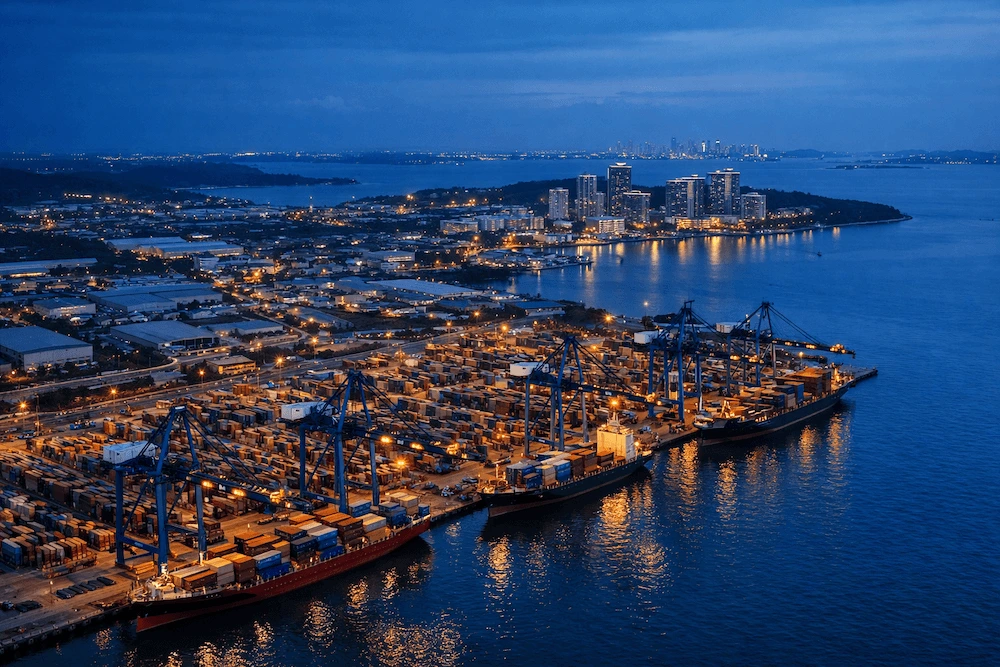
Strategically positioned at the crossroads of major international shipping lanes, the Free Trade Zone Batam has transformed a once-quiet island into one of Southeast Asia’s most dynamic investment destinations.
| 20km FROM SINGAPORE | 715km² FTZ TOTAL AREA | 1.5M+ POPULATION |
Few places in Southeast Asia illustrate the transformative power of trade policy quite like Batam. A small island in Indonesia’s Riau Archipelago that was little more than a fishing village half a century ago, Batam has grown into a bustling industrial and commercial hub. At the heart of this metamorphosis lies the Free Trade Zone Batam — a bold economic experiment that has paid dividends for both Indonesia and the multinational investors who recognized its potential early.
What Is the Free Trade Zone Batam?
The Free Trade Zone Batam is a designated economic area where goods can be manufactured, reconfigured, landed, stored, mixed, or otherwise manipulated without the intervention of customs authorities. In practical terms, this means businesses operating within the zone can import raw materials and export finished goods largely free of import duties and value-added taxes — a powerful incentive that dramatically reduces the cost of doing business.
Established under Government Regulation No. 46 of 2007 and subsequently strengthened by Presidential Regulation No. 87 of 2011, the zone covers the entirety of Batam Island — roughly 715 square kilometers — making it one of the largest free trade areas in the ASEAN region. The regulatory framework is administered by the Batam Free Trade Zone Authority, known locally as BP Batam (Badan Pengusahaan Kawasan Perdagangan Bebas dan Pelabuhan Bebas Batam).
“Batam is not just an island with tax incentives — it is a fully integrated logistics, manufacturing, and services ecosystem positioned at the world’s busiest sea lane.”
Strategic Location: Proximity Is Power
Geography is perhaps the single greatest asset of the Batam Free Trade Zone. Separated from Singapore by the narrow Strait of Malacca — a distance of less than 20 kilometers — Batam sits adjacent to one of the world’s most significant maritime corridors. More than 40% of global trade passes through these waters annually, and Batam is positioned to capture a meaningful slice of that activity.
This proximity to Singapore creates a natural synergy. Many multinational companies use Singapore as their regional headquarters and financial base while relocating manufacturing and back-office operations to Batam, where land and labor costs are considerably lower. The two islands are linked by regular ferry services with a crossing time of under 45 minutes, making daily cross-border commuting and business operations entirely feasible.
Did you know? The Batam–Singapore ferry corridor is one of the busiest international sea passenger routes in the world, with thousands of crossings recorded weekly. This connectivity is a key reason the FTZ Batam remains attractive to Singapore-based investors and multinational companies with regional operations.
Key Incentives Within FTZ Batam
The FTZ Batam framework offers a suite of fiscal and non-fiscal incentives that collectively make it one of Indonesia’s most competitive investment destinations:
- Import duty exemption — Raw materials, machinery, and capital goods imported into the zone are exempt from import duties, significantly lowering production costs for manufacturers.
- VAT and luxury goods tax waiver — Goods delivered within the zone, as well as goods exported from the zone to overseas destinations, are generally not subject to Indonesia’s value-added tax (PPN) or luxury goods sales tax (PPnBM).
- Corporate income tax facilities — Eligible investors may access income tax holiday schemes and investment allowances under Indonesia’s broader national investment incentive program.
- Streamlined customs procedures — BP Batam operates a dedicated one-stop service center to simplify licensing, permitting, and customs clearance processes.
- No export restrictions — Businesses can export freely without the quotas or restrictions that apply in other parts of Indonesia.
Major Industries Driving Growth
Over the decades, the Batam Free Trade Zone has developed a diversified industrial base that spans several high-value sectors. Electronics and electrical manufacturing led the initial wave of foreign investment, drawn by cost advantages and the established supply chains connecting Batam to Singapore’s semiconductor and precision engineering clusters. Today, global names in hard disk drive production, printed circuit board assembly, and electronic components manufacturing maintain significant production footprints on the island.
Shipbuilding and ship repair has emerged as another pillar of Batam’s economy. The island’s extensive coastline, deep-water anchorage facilities, and skilled labor force have made it a preferred location for offshore oil and gas fabrication yards, dry docks, and marine engineering workshops. With Indonesia’s vast maritime territory and the continued growth of seaborne trade in the Asia-Pacific, this sector shows no signs of slowing.
Beyond manufacturing, Batam has cultivated a growing information technology and business process outsourcing (BPO) sector, capitalizing on its young workforce and improving digital infrastructure. Tourism, particularly from Singapore day-trippers and weekend visitors, adds another layer to the island’s economic activity, with resorts, golf courses, and entertainment complexes dotting its northern coast.
Infrastructure and Connectivity
A free trade zone is only as effective as the infrastructure that supports it. The FTZ Batam has benefited from sustained public and private investment in connectivity infrastructure. Batam Hang Nadim International Airport handles direct flights to major Indonesian cities and several international destinations, reducing dependence on Singapore’s Changi Airport as the primary regional gateway. The airport’s cargo facilities have been progressively upgraded to support time-sensitive manufacturing and logistics operations.
The island’s seaport network includes multiple cargo terminals — among them the Batu Ampar Port, which serves container traffic, and specialized berths catering to the oil and gas and shipbuilding industries. Road infrastructure within the zone has been continuously improved, reducing internal logistics costs and transit times between industrial estates and port facilities.
Challenges and the Path Forward
Despite its successes, the Batam Free Trade Zone faces real challenges that policymakers and investors must navigate carefully. Regulatory uncertainty has historically been a point of concern — overlapping jurisdictions between BP Batam and local government bodies have at times created confusion over land titles, permits, and investment approvals. The Indonesian government has undertaken reforms to streamline these processes, but consistency of implementation remains a work in progress.
Competition from other special economic zones within Indonesia — including those in Bintan, Karimun, and the emerging Nusantara capital region — means that Batam can no longer rest on the advantages it accumulated in earlier decades. Regional competitors in Vietnam, Malaysia, and the Philippines have also sharpened their investment propositions, intensifying the contest for mobile manufacturing capital.
Looking ahead, BP Batam has articulated an ambitious vision for the zone that emphasizes higher-value industries — precision engineering, digital economy infrastructure, renewable energy, and medical devices — rather than competing purely on cost. An expanded Hang Nadim airport with increased international connectivity, a planned new seaport terminal, and investments in broadband infrastructure are all designed to position FTZ Batam for the next chapter of its development story.
Conclusion
The Free Trade Zone Batam represents one of Indonesia’s most enduring and consequential economic policy experiments. From its origins as a manufacturing overspill zone for Singapore-linked industries to its present-day ambitions as a diversified investment destination, Batam has demonstrated remarkable resilience and adaptability. For businesses seeking a foothold in Southeast Asia’s dynamic economy — with access to Indonesia’s vast domestic market, ASEAN-wide trade networks, and the established financial infrastructure of nearby Singapore — the Batam Free Trade Zone continues to offer a compelling and strategically sound proposition.

Article By
Tjhia Edy Tarlesno, SH, LLM.
Edy is COO of Business Hub Asia with 20+ years’ experience in legal, compliance, and foreign investment, leading operations and regulatory strategy across Indonesia and Southeast Asia.
Stay updated with market insights
Frequently Asked Questions
What is the Batam Free Trade Zone?
The Batam Free Trade Zone is a special trade and port area in Indonesia designed to support investment, manufacturing, and international trade. Businesses in Batam can benefit from customs and tax facilities that make cross-border operations more efficient. BP Batam describes Batam as Indonesia’s FTZ, while Indonesian Customs explains that FTZ areas receive exemptions from import duty, VAT, luxury goods tax, and certain excise obligations.
Why is Batam considered a gateway to global commerce?
Batam sits near Singapore on one of the world’s busiest shipping routes, which makes it highly attractive for regional distribution, sourcing, and export-oriented operations. Its location helps businesses connect Indonesia with wider ASEAN and global markets more efficiently.
What are the main benefits of setting up a business in Batam FTZ?
The main advantages usually include customs and tax facilities, easier access to imported materials, a strategic logistics position, and a business environment built for trade and industry. For foreign companies, Batam can be an efficient entry point when the structure, licenses, and operational scope are planned properly from the start.
Is the entire Batam area covered by Free Trade Zone incentives?
BP Batam’s official FAQ states that the free trade zone applies to the entire island of Batam, so businesses established on the island may access the incentives available under the FTZ framework, subject to the applicable rules and business activity.
Can foreign investors open a company in Batam?
Yes. Foreign investors can generally establish a foreign-owned company in Indonesia, and Batam is a common choice for businesses that want to combine Indonesian market access with FTZ advantages. In practice, the right setup depends on the business line, ownership rules, and licensing requirements in OSS.
What permits are needed to start a business in Batam FTZ?
Most investors will need to go through Indonesia’s OSS system to obtain a Business Identification Number (NIB) and follow the risk-based licensing process. Depending on the sector, additional operational or commercial licenses may also be required, and coordination with BP Batam can be important for land, facilities, or area-specific approvals.
Who regulates investment and business activities in Batam?
Business activities in Batam typically involve more than one authority. OSS handles Indonesia’s integrated licensing process, while BP Batam plays a key role in Batam’s investment environment, including area management and investment facilitation.
Which industries are best suited for Batam FTZ?
Batam is especially attractive for manufacturing, logistics, warehousing, shipbuilding, and other trade-linked industries. It is often chosen by companies that rely on imported components, export channels, or regional supply chain connectivity.
Is Batam FTZ a good option for export-oriented businesses?
Yes. Batam is widely positioned as an export-focused business location because its FTZ status can reduce friction in importing materials and shipping goods internationally. That makes it particularly relevant for manufacturers and traders serving overseas markets from Indonesia.
How can Business Hub Asia help with Batam FTZ setup?
For foreign investors, Batam is attractive, but the setup process still needs the right company structure, KBLI selection, licensing route, and compliance planning. Business Hub Asia can support that process end-to-end, from market entry strategy and PT PMA establishment to licensing and ongoing compliance, so investors can enter Batam with a structure that matches their commercial goals and regulatory obligations. This is a service-based recommendation rather than an official government requirement.
Get in Touch With Our Team
Let us know how we can assist with your company formation or expansion.
Start Your SEA Market Entry with Confidence
Business Hub Asia is ready to help you navigate Indonesia, Vietnam, and Philippines regulations, from business licensing and product registration to workforce management. With an efficient, accurate, and business-focused approach.
Disclaimer
The content provided on this website is published by PT. Bisnis Hub Asia (“we“, or “us“) for general informational purposes only. While every effort is made to ensure the accuracy and timeliness of the information presented, we make no representations or warranties, express or implied, as to the completeness, accuracy, reliability, suitability, or availability of any content, products, or services described on this website. Any reliance placed on such information is strictly at the user’s own risk.
We are a private, independent entity and are not affiliated with, authorized by, or acting on behalf of the Government of the Republic of Indonesia, its ministries, agencies, or any officially appointed representatives. This website does not provide, offer, or promote any official government documents or services, including but not limited to:
Business identification numbers (Nomor Induk Berusaha – NIB);
Tax refunds or rebates;
Stay Permit or electronic travel authorizations;
Passports or other immigration-related documents.
Any references to such services are provided solely for general informational purposes and should not be construed as an offer or facilitation of official services.
We are committed to ensuring the protection of your personal data in accordance with Law No. 27 of 2022 on Personal Data Protection. Any personal information collected through this website will be processed for the purposes clearly stated in our [Privacy Statement]. We do not sell or misuse personal data under any circumstances.
By accessing and using this website, you acknowledge and agree to the terms set out in this Disclaimer. You further agree to use this website and the information provided responsibly and in compliance with applicable laws and regulations.
For further information or questions regarding this Disclaimer, please contact us via the channels provided on our Contact page.
You May Also Like
Stay informed with our latest insights, guides, and articles on doing business in Southeast Asia.
Business License
KBLI 2025 vs KBLI 2020: How to Read Your NIB and Confirm Compliance
Tjhia Edy Tarlesno, SH, LLM. • August 7, 2026
Business License
Indonesia Business License After NIB: What You Still Need to Operate Legally

Fahri Ramanda Putra • May 25, 2026
Business License
How to Start a Fintech Company in Indonesia: The Complete Guide for Foreign Investors
Fahri Ramanda Putra • May 8, 2026