








Medical Device Product Registration in Indonesia: A Complete Guide to IDAK, Radiation Devices, and Regulatory Compliance
4月 21, 2026
•
9分で読めます
コンテンツ
Introduction: Why Medical Device Product Registration Matters in Indonesia
For foreign manufacturers and distributors seeking to enter the Indonesian healthcare market, understanding medical device product registration is not optional; it is the foundation of any viable market entry strategy. Indonesia, home to over 270 million people, operates one of the most dynamic and rapidly growing healthcare markets in Southeast Asia.
Yet its regulatory environment is equally demanding, especially when the devices in question emit ionizing or non-ionizing radiation.
At the heart of this regulatory landscape sits the Izin Distribusi Alat Kesehatan (IDAK), the official distribution license issued by Indonesia’s Ministry of Health. Without it, no company can legally import, store, or sell medical devices in the country. For devices such as X-ray machines, CT scanners, MRI systems, or radiotherapy equipment, the compliance requirements extend even further, requiring alignment with the radiation safety standards set by BAPETEN (Indonesia’s Nuclear Energy Regulatory Agency).
This guide provides a comprehensive, plain-language overview of Indonesia’s medical device registration framework, from core licensing requirements to quality management standards, risk management, and what global companies must do to succeed in this market.
What Is the IDAK and Why Is It Central to Medical Device Registration Indonesia?
その Izin Distribusi Alat Kesehatan (IDAK) functions as the legal gateway for any entity wishing to distribute medical devices within Indonesia. Issued by the Ministry of Health (Kemenkes), the IDAK confirms that the applicant has the necessary infrastructure, qualified personnel, and a documented Quality Management System (QMS) to safely handle and distribute medical devices.
The IDAK is not simply an administrative formality. It certifies that the distributor operates in compliance with CDAKB (Cara Distribusi Alat Kesehatan yang Baik), Indonesia’s national Good Distribution Practice standard for medical devices. CDAKB dictates how devices must be received, stored, tracked, and delivered, from the point of import all the way to the end-user healthcare facility.
For foreign medical device manufacturers, partnering with an IDAK-certified distributor is one of the primary legal pathways to the Indonesian market. This makes the distributor’s compliance status directly tied to the manufacturer’s commercial viability and product registration timelines.
Without a valid IDAK, a distributor faces:
- Seizure of goods by regulatory authorities
- Severe administrative and financial penalties
- Disqualification from public and private procurement processes
- Reputational damage that affects long-term market access
Medical Device Product Registration Services in Indonesia: The Regulatory Ecosystem
Indonesia’s medical device regulatory system is built on two parallel pillars:
1. The Ministry of Health (IDAK and CDAKB)
The MOH is responsible for licensing distributors and registering medical devices for market access. Its focus is on quality management and supply chain integrity. The relevant standards include:
- ISO 13485:2016, the globally recognized QMS framework for medical device organizations, which forms the technical backbone of the IDAK certification process.
- CDAKB, which mandates documented procedures for personnel training, facility management, temperature and humidity control, product traceability, complaint handling, and recall management.
2. BAPETEN (Radiation Safety Regulator)
For devices that emit radiation, whether ionizing (X-ray, CT, radiotherapy) or high-power non-ionizing (surgical lasers, high-intensity ultrasound), distributors must also align with BAPETEN’s radiation safety regulations. These align closely with International Atomic Energy Agency (IAEA) guidance and cover import permits, installation licensing, and ongoing operational compliance.
The critical point here is that both sets of requirements must be satisfied simultaneously. A distributor cannot obtain full market authorization for radiation-emitting equipment by satisfying only one regulatory body’s requirements. The MOH’s quality framework and BAPETEN’s radiation safety framework operate as complementary, non-substitutable layers of compliance.
Understanding the Risks: Why Radiation Devices Require Specialized Medical Device Registration in Indonesia
Standard distribution logistics are insufficient for radiation-emitting electromedical devices. The nature of the technology introduces unique risks that demand a more sophisticated compliance approach.
Ionizing Radiation Devices
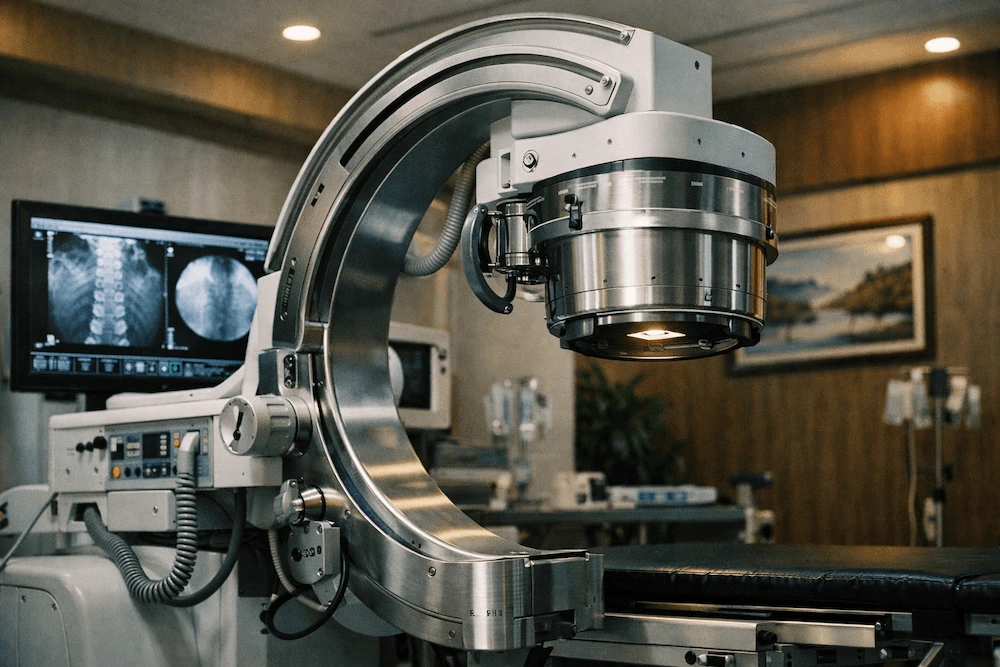
Devices such as X-ray systems, fluoroscopy units, CT scanners, and radiotherapy equipment (linear accelerators, Cobalt-60 units) carry the risk of unintended radiation exposure to patients, operators, and bystanders. Even minor mishandling during transit or installation can compromise:
- Shielding integrity, creating radiation leakage outside the intended treatment or diagnostic area
- Factory calibration, leading to inaccurate dose delivery in therapeutic devices or degraded image quality in diagnostic equipment
- Safety interlock systems, which protect operators and patients if the device behaves unexpectedly
Non-Ionizing Radiation Devices
MRI systems, therapeutic lasers, and high-intensity ultrasound units are classified as non-ionizing but carry distinct risks. MRI machines generate powerful magnetic fields that pose hazards to implanted devices and metallic objects. High-powered lasers carry thermal risk if improperly operated or installed. These risks are compounded when installation is performed without certified, device-specific expertise.
The regulatory response to these risks is direct: only IDAK-certified distributors with the technical competence to install, commission, and validate these devices may handle them.
The CDAKB Standard: Good Distribution Practice for Medical Devices
その CDAKB framework sets the operational standards that underpin every IDAK certification. It is Indonesia’s equivalent of Good Distribution Practice (GDP) as referenced in WHO and ISO guidance documents.
Key operational pillars of CDAKB compliance include:
Facility Readiness Storage areas must meet strict environmental controls: regulated temperature and humidity, vibration isolation for calibration-sensitive components, and for ionizing devices, appropriate radiation shielding (lead lining or equivalent barriers) to keep ambient exposure levels below regulatory thresholds.
Personnel Qualifications その Penanggung Jawab Teknis (PJT), or Technical Person in Charge, holds a legally mandated role within the IDAK-licensed organization. This individual oversees technical quality control, documentation, and serves as the primary regulatory liaison. For complex ionizing devices, the involvement of qualified radiation physicists is also a standard requirement.
Traceability and Documentation Every distributed device must be traceable by serial number from import through to the end-user facility. This chain of custody is essential for executing product recalls efficiently and for supporting regulatory investigations following adverse events.
Post-Market Surveillance (PMS) IDAK holders are required to maintain systems for adverse event reporting, field safety corrective actions (FSCAs), and recall management. Timely reporting to both the manufacturer and the relevant authority (MOH or BAPETEN) is a binding obligation, not a recommendation.
Installation and Commissioning: The “Last Mile” of Medical Device Product Registration
One of the most distinctive aspects of Indonesia’s medical device regulatory framework is its emphasis on the installation and commissioning phase. Unlike markets where post-delivery compliance is the responsibility of the end-user alone, Indonesia places this obligation on the IDAK-certified distributor.
The distributor’s installation responsibilities include:
- Dose verification, confirming that radiation output meets the manufacturer’s specified tolerances
- System integration checks, verifying the function of all safety interlocks, warning indicators, and emergency shutdown systems
- Acceptance testing, conducted in collaboration with the facility’s qualified personnel to document device performance before clinical use begins
For ionizing devices, this phase often requires collaboration with BAPETEN to obtain the final operational permit. The device may not enter clinical use until this verification is complete and documented.
This requirement reinforces why the technical competence of the distributor is central to the entire product registration process, not just the logistics component.
Risk Management and Quality Assurance Under the IDAK Framework
A well-structured QMS under the IDAK framework addresses three core areas of risk management:
Enhanced Traceability and Recall Management
Serial number tracking creates an immutable audit trail from import to end-user. Pre-defined recall protocols govern how defective units are identified, isolated, and safely returned or destroyed, particularly critical for devices containing radioactive sources. Audit trail integrity is mandatory for regulatory reviews and post-market investigations.
Preventive Maintenance and Calibration
All radiation-emitting devices must undergo scheduled calibration performed by certified technicians using traceable standards. This schedule is a binding condition of the distribution license, not a manufacturer recommendation. Failure to maintain accurate maintenance logs can result in license suspension. Preventive maintenance also extends to software and firmware updates, which often include safety-critical patches for dose delivery algorithms.
Patient Safety Outcomes
The ultimate goal of Indonesia’s regulatory framework is measurable patient protection. Research consistently links higher distributor compliance scores to lower rates of accidental radiation exposure, fewer equipment-related diagnostic errors, and reduced incidence of near-miss events. Strict IDAK adherence also minimizes dose variance, ensuring therapeutic radiation reaches patients within prescribed tolerances and diagnostic imaging meets consistent quality standards.
Global Comparisons: How IDAK Alkes Fits Into International Regulatory Frameworks
For international manufacturers accustomed to the EU MDR or US FDA frameworks, the IDAK system has both parallels and distinct characteristics.
IDAK (Indonesia) focuses on licensing the distributor entity based on its QMS capability, facility readiness, and technical personnel. It is a distributor-centric authorization that gates market access through the local partner.
EU Medical Device Regulation (MDR) places comparable obligations on distributors as economic operators. They must verify CE marking, maintain a QMS, document storage and transport processes, and participate in post-market surveillance alongside manufacturers.
US FDA Framework addresses pre-market clearance (510(k)) separately from distribution obligations. Post-market distribution compliance falls under the Quality System Regulation (QSR), which governs storage, handling, and reporting in alignment with the device’s cleared intended use.
The key insight for global manufacturers is this: the IDAK framework is a gateway, not an afterthought. Unlike some markets where local distribution is treated as a logistics function, in Indonesia, the distributor’s regulatory standing directly determines whether and how quickly a product reaches the market.
Challenges and Emerging Solutions in Medical Device Registration Services in Indonesia
The Cost of Compliance vs. the Risk of Non-Compliance
Achieving and maintaining IDAK certification requires investment in QMS infrastructure, personnel training, facility upgrades, and ongoing audit readiness. For smaller distributors, these costs can be a significant barrier. However, the risks of non-compliance, including product seizure, penalties, and patient harm from improperly handled radiation devices, are substantially greater.
The Indonesian regulatory environment is designed to consolidate market participation around distributors that can demonstrate genuine technical capability, which ultimately benefits patient safety.
Digital Transformation in Licensing
Indonesia is actively modernizing its regulatory infrastructure. The implementation of the オンライン単一投稿(OSS) platform and the Single Submission Window (SSW) aims to streamline licensing applications, reduce processing timelines, and improve transparency. These digital platforms also support better data visibility for regulators conducting post-market surveillance of high-risk devices.
Future Innovation in Compliance
Emerging technologies offer further opportunities to strengthen the medical device distribution ecosystem:
- Artificial Intelligence for analyzing post-market surveillance data and predicting non-compliance risks
- Blockchain technology for creating immutable, decentralized traceability records across the device lifecycle
- Remote digital inspections using live video audits and IoT-connected devices, particularly valuable for geographically dispersed markets
Conclusion: Medical Device Product Registration as a Strategic Advantage
For foreign manufacturers and distributors entering Indonesia’s healthcare market, medical device product registration is not simply a compliance checkbox. When approached strategically, the IDAK certification process becomes a competitive differentiator, signaling to hospitals, clinics, and procurement bodies that the distributor meets Indonesia’s most rigorous standards for technical competence and patient safety.
The IDAK framework, supported by CDAKB standards and BAPETEN’s radiation safety regulations, represents one of the most comprehensive medical device distribution governance systems in Southeast Asia.
Understanding and navigating this system effectively is what separates successful market entry from costly delays.
Medical device registration services in Indonesia are most effective when delivered by partners who understand both the technical requirements of radiation-emitting devices and the procedural landscape of Indonesian regulatory bodies.
The right compliance partner does not just file paperwork; they help manufacturers build a distribution infrastructure capable of sustaining long-term market participation.
Regulatory compliance and patient safety are not competing priorities in Indonesia’s medical device market. They are the same priority.

記事執筆者
フセイン・H・マシュア博士(医学博士)
Hussein is a licensed medical doctor and healthcare executive with 10+ years in pharma, medical devices, and digital health. At Business Hub Asia, he guides global firms through MoH, BPOM, and CDAKB registration, market access, and regulatory compliance across Southeast Asia.
市場の洞察を常に最新の状態に保つ
私たちのチームに連絡してください
弊社が貴社の会社設立や拡大にどのように貢献できるかお知らせください。
自信を持って東南アジア市場への参入を始めましょう
Business Hub Asiaは、事業ライセンスや製品登録から従業員管理まで、インドネシア、ベトナム、フィリピンの規制遵守をお手伝いします。効率的で正確、そしてビジネス重視のアプローチでサポートいたします。
免責事項
このウェブサイトで提供されるコンテンツは、 PT. ビジネスハブアジア (“「“私たちは"、 または "私たち(以下「本サイト」といいます)は、一般的な情報提供のみを目的としています。掲載情報の正確性と最新性を確保するため、当社はあらゆる努力を払っておりますが、本サイトに掲載されているコンテンツ、製品、またはサービスの完全性、正確性、信頼性、適合性、または可用性について、明示的または黙示的を問わず、いかなる表明または保証も行いません。当該情報への依拠は、ユーザーご自身の責任において行っていただきますようお願いいたします。
私たちは 民間の独立団体 そして 提携関係にない, 承認者、 または 代理として行動する インドネシア共和国政府、その省庁、機関、または公式に任命された代表者。本ウェブサイトは ない 以下を含むがこれに限定されない、政府の公式文書またはサービスを提供、提供、または宣伝すること:
-
企業識別番号 (Nomor Induk Berusaha – NIB);
-
税金の還付または払い戻し。
-
滞在許可証または電子渡航認証。
-
パスポートまたはその他の入国関連書類。
かかるサービスへの言及は、一般的な情報提供のみを目的としており、公式サービスの提供または促進として解釈されるべきではありません。
当社は、お客様の個人情報を以下のとおり保護することに尽力しております。 2022年個人情報保護法第27号当ウェブサイトを通じて収集された個人情報は、[プライバシーステートメント]に明記されている目的のために処理されます。いかなる状況においても、個人データを販売または悪用することはありません。
本ウェブサイトにアクセスし、本ウェブサイトを利用することにより、お客様は本免責事項に定められた条件を承認し、同意するものとします。また、お客様は本ウェブサイトおよび提供される情報を、適用される法令を遵守し、責任を持って利用することに同意するものとします。
この免責事項に関する詳しい情報やご質問については、お問い合わせページに記載されているチャネルを通じて当社までご連絡ください。
あなたも気に入るかもしれない
東南アジアでのビジネスに関する最新の洞察、ガイド、記事で最新情報を入手してください。
製品登録
BPOM Nutri-Level: What Indonesia’s New Food Labeling Regulation Means for Every Food and Beverage Business
Dr. Hussein H. Mashhour, MD • 4月 17, 2026
Product Registration, SNI Registration
Indonesia Product Certification 2026: SNI, BPOM, and Halal Requirements Explained

Fahri Ramanda Putra • 4月 14, 2026
製品登録
Izin PKRT in Indonesia: The Complete Guide to Household Product Registration for Foreign Manufacturers
Dr. Hussein H. Mashhour, MD • 4月 10, 2026